Design Checks: Independent Review Proportionate to Risk
TWInst Editorial Team · 3 min
A design check is a structured technical review of the temporary works design. Its depth and independence should reflect the complexity of the system, the novelty of the solution and the consequences of failure.
The checking arrangement should be agreed before design starts and recorded in the temporary works register.
What should be checked?
The checker should consider:
- Compliance with the design brief
- Design assumptions and input information
- Loads, combinations and temporary stages
- Overall stability and load paths
- Member, connection and foundation capacities
- Supporting ground or permanent-works capacity
- Construction and dismantling sequences
- Interfaces with other structures and operations
- Drawings, specifications and calculation consistency
- Residual risks, tolerances and inspection requirements
For higher-risk or unusual designs, the checker should have suitable independence from the original design team. Standard or repetitive solutions may use a simpler check, provided their limitations and applicability are confirmed.
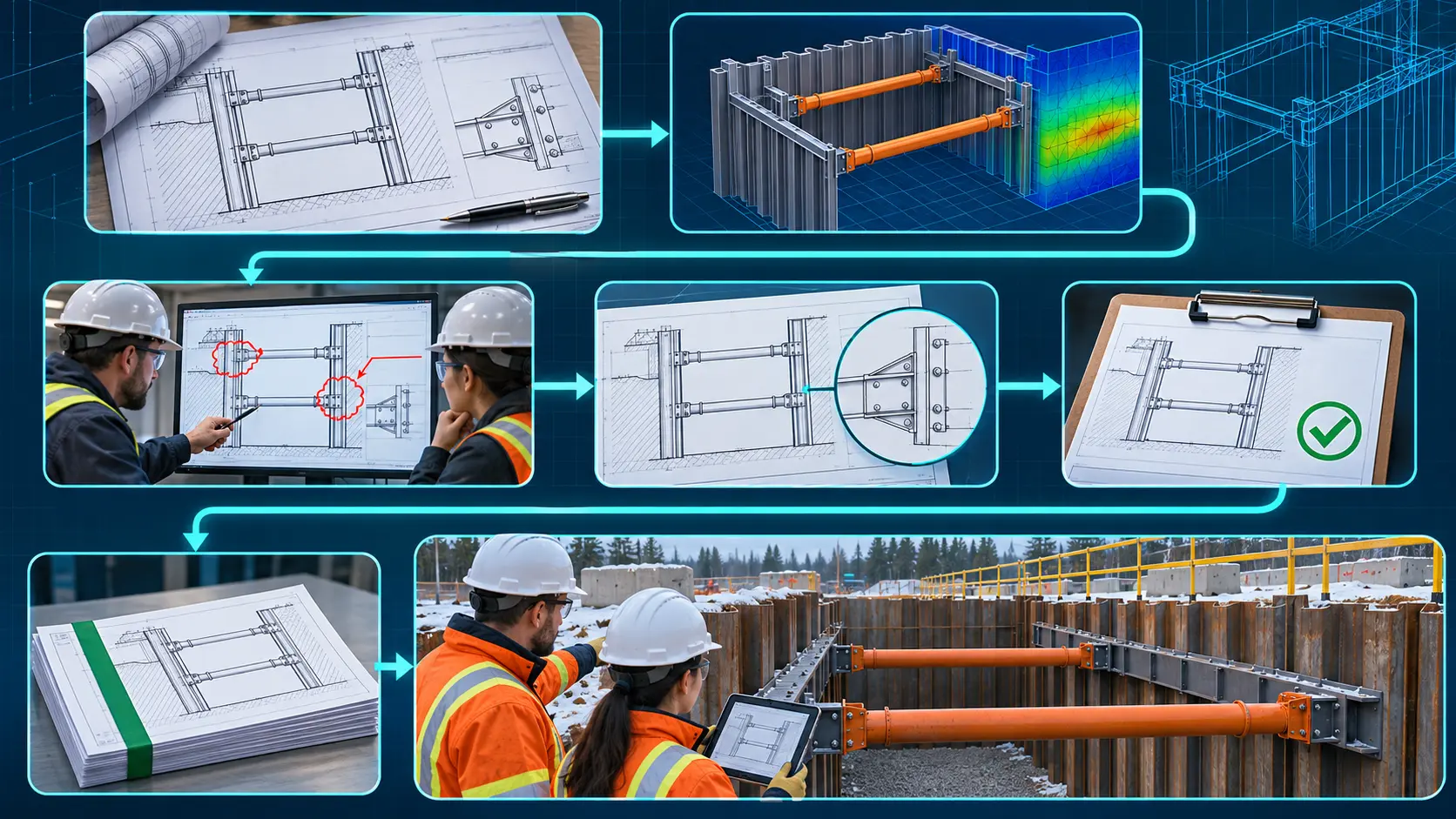
Closing the check
Comments should be formally answered and closed. The accepted calculation revision must match the issued drawings. A later change affecting the design assumptions, configuration, sequence or loading should return to design review and checking.
A design check does not confirm that the system has been built correctly. That requires separate field verification.
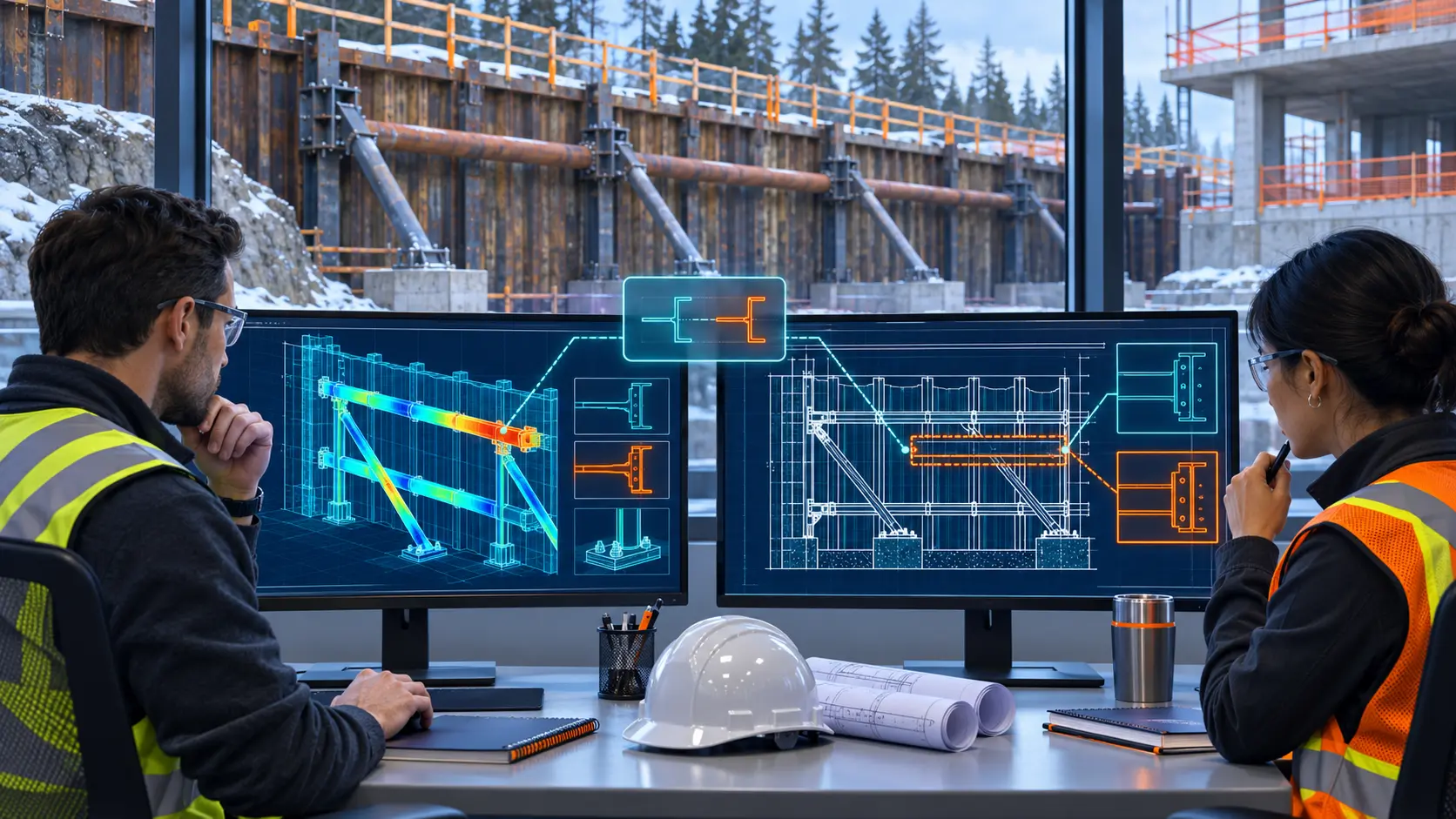
Independent checking is most effective when it is planned early and scaled to the real risk.
General educational information only. Project-specific work should follow applicable requirements, approved engineering documents, manufacturer instructions and the project's temporary works procedure.