Site Verification: Confirming the Installed Arrangement
TWInst Editorial Team · 3 min
Site verification confirms whether the installed temporary works match the accepted design and specified requirements before they are loaded or used.
It is different from a design check and different from a routine condition inspection.
What should be verified?
The verifier should use the current accepted drawings and consider:
- System location, geometry and orientation
- Component type, size, spacing and condition
- Foundations, mudsills and bearing surfaces
- Bracing, ties, anchors and connections
- Levels, verticality, alignment and adjustment limits
- Access, working platforms and edge protection
- Required clearances and exclusion areas
- Construction stage and installation sequence
- Interfaces with permanent works and nearby activities
- Specified testing, torque, proof-load or monitoring records
Any deviation should be recorded and assessed. It should not be accepted solely because a similar arrangement has worked elsewhere.

Recording and release
Verification records should identify the system, exact location, drawing revision, date, verifier, findings and outstanding actions. Photographs can support the record but should not replace a structured check.
Reverification may be required following alteration, relocation, partial dismantling, impact, settlement, severe weather or another change affecting the verified condition.
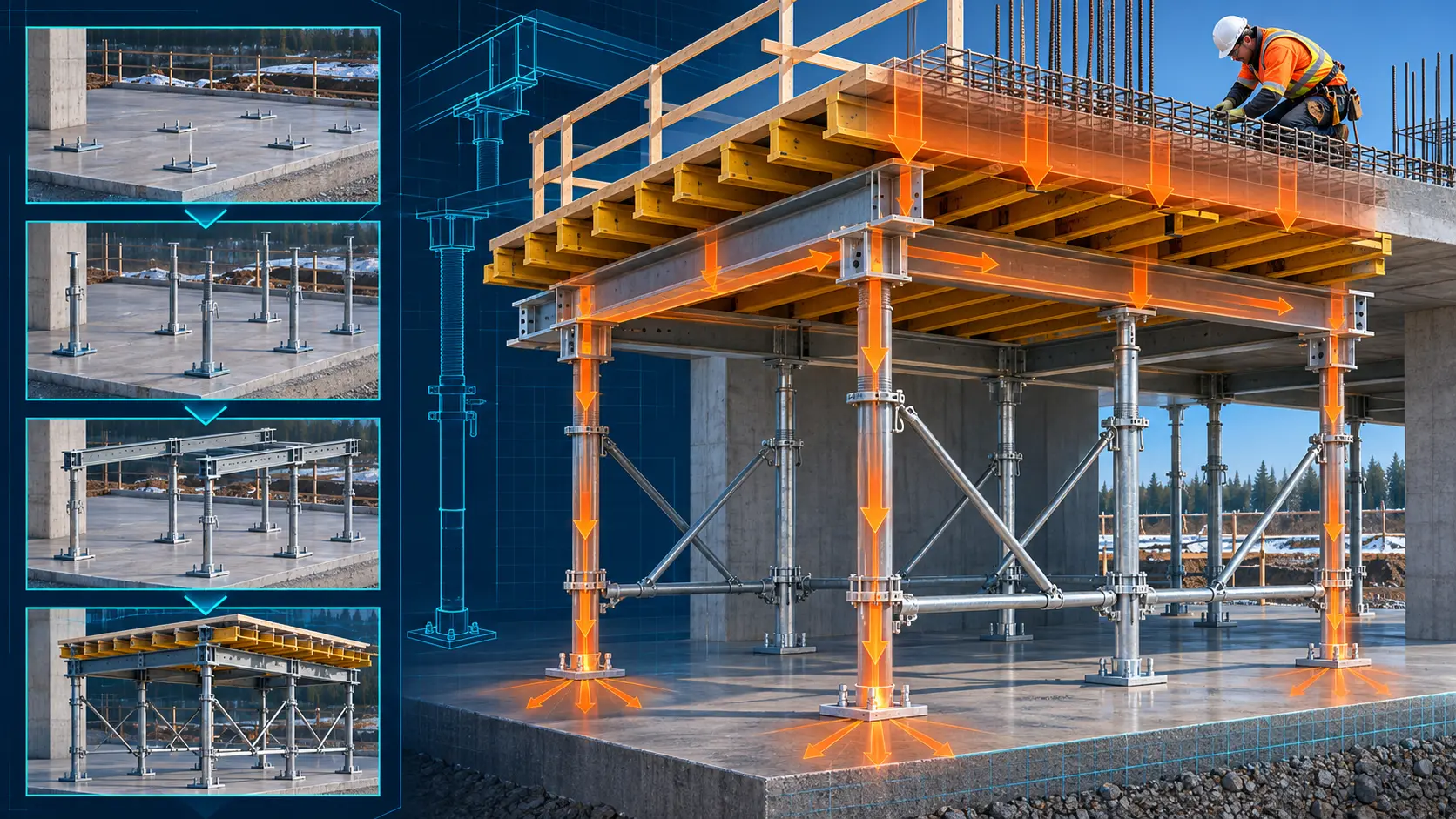
A release should be based on evidence that the installed arrangement matches the accepted design.
General educational information only. Project-specific work should follow applicable requirements, approved engineering documents, manufacturer instructions and the project's temporary works procedure.