Risk Management: Controlling the Complete Temporary Lifecycle
TWInst Editorial Team · 3 min
Temporary works risk changes between design, installation, loading, use and removal. Risk management should therefore follow the complete lifecycle rather than relying on a single assessment prepared before work begins.
Typical sources of risk
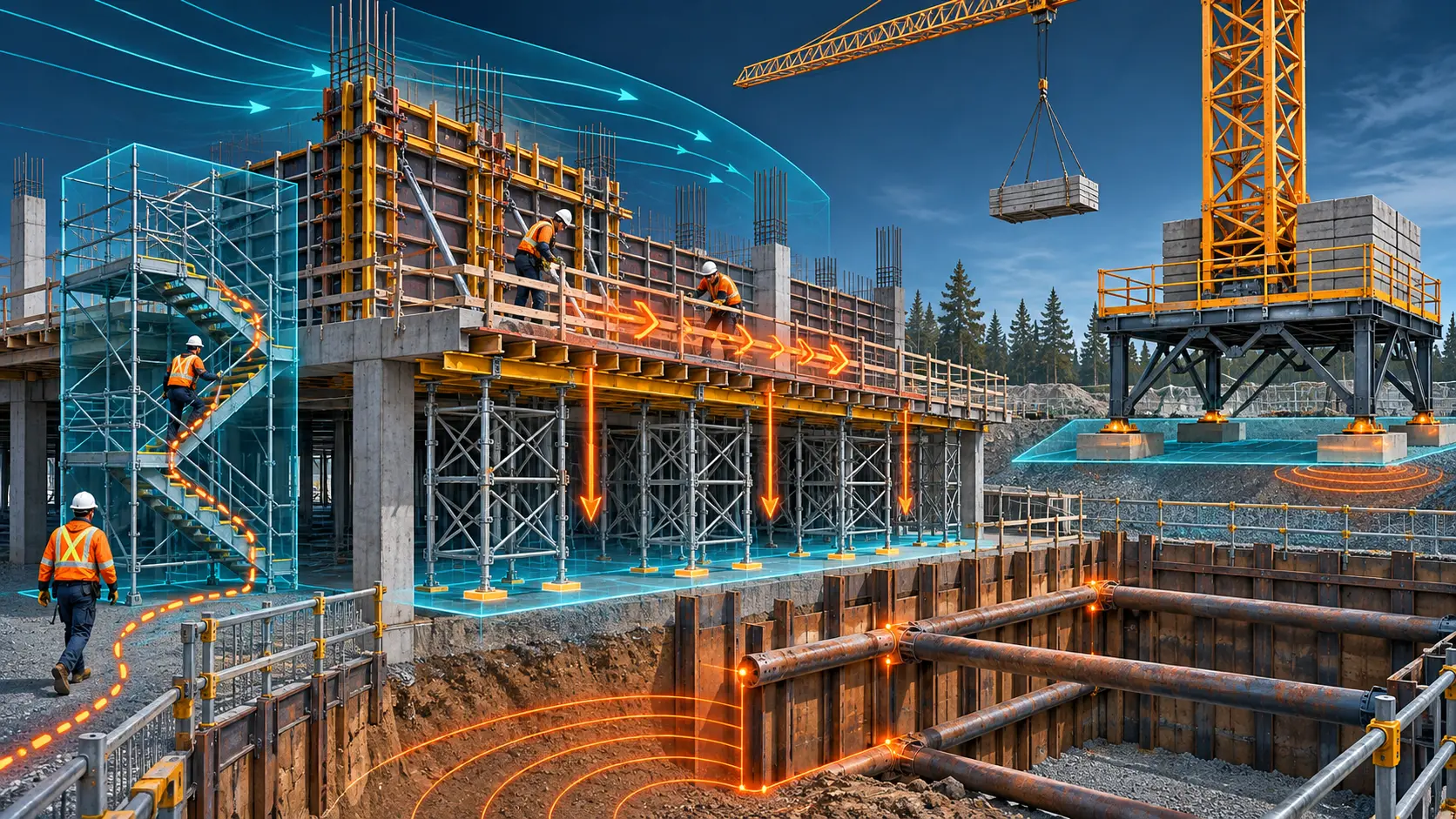
Temporary works risks may arise from:
- Collapse, overturning, sliding or uplift
- Overloading or unintended load transfer
- Weak ground or an inadequate supporting structure
- Wind, water, snow, ice, erosion or frost
- Incorrect construction or removal sequence
- Uncontrolled lifting and installation activities
- Access, work-at-height and falling-object hazards
- Adjacent structures, services, traffic and the public
- Contractor and system interfaces
- Unauthorized changes or premature removal
Controls should prioritize eliminating or simplifying the hazard before relying on procedures or personal protective equipment.
Active risk control
Each significant risk should have an owner, controls, review triggers and a clear residual-risk communication route. The assessment should be revisited when the design, sequence, loading, environment or adjacent work changes.
A risk matrix can help prioritize action, but it cannot replace technical understanding of failure modes and load paths.
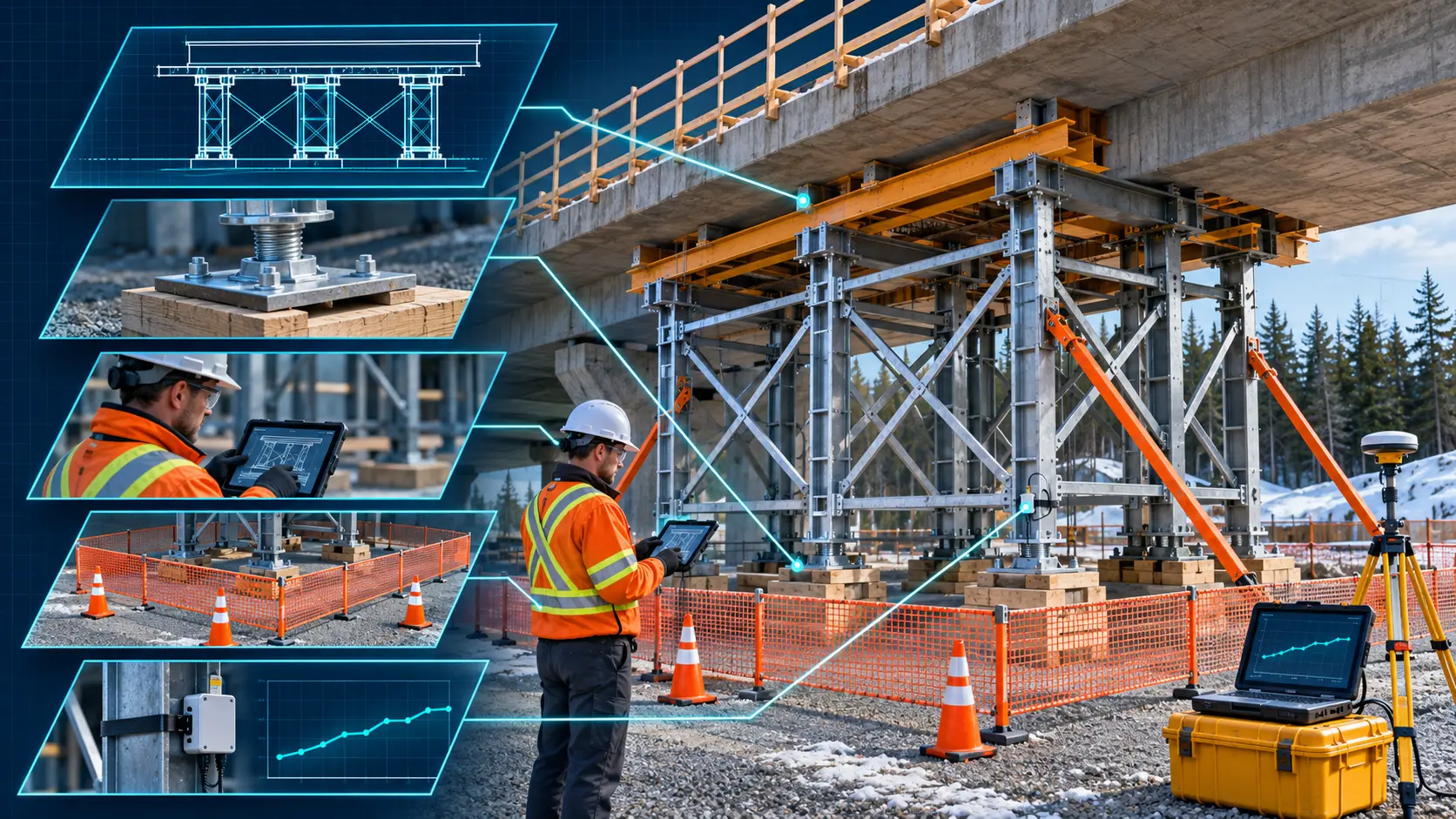
Risk management is a continuous technical process: not a form completed once and filed away.
General educational information only. Project-specific work should follow applicable requirements, approved engineering documents, manufacturer instructions and the project's temporary works procedure.