Inspections: Maintaining Safety Throughout Use
TWInst Editorial Team · 3 min
Inspection is the planned examination of temporary works during installation and use. Unlike initial site verification, inspections monitor whether the system remains complete, stable and serviceable as conditions change.
Build an inspection plan
The inspection plan should define:
- What must be inspected
- Who is competent and authorized to inspect it
- When inspections are required
- Acceptance and rejection criteria
- How results and photographs will be recorded
- Who closes deficiencies
- What conditions require work to stop or the area to be isolated
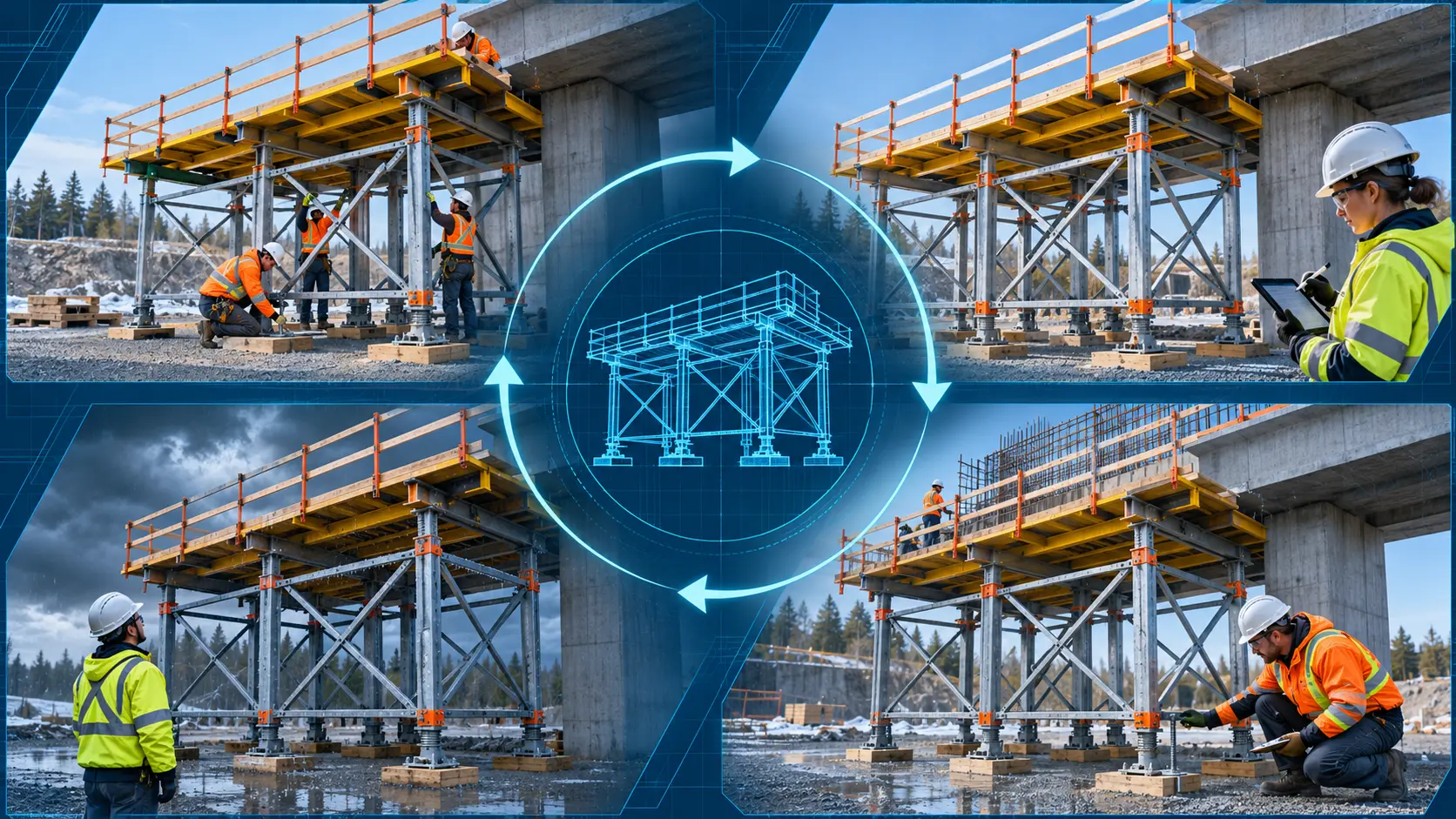
Inspection stages may include delivery, erection, pre-load verification, initial use, periodic inspection, inspection after an event or alteration, and checks before dismantling.
What inspectors should look for
Depending on the system, inspections may consider:
- Missing, loose, damaged or incompatible components
- Settlement, movement, deformation or loss of alignment
- Changed loading or unauthorized material storage
- Removed ties, braces, guardrails or access components
- Water, erosion, frost, wind or weather effects
- Impact from vehicles, lifting operations or equipment
- Alterations not shown on the accepted drawings
- Deterioration affecting continued use
Deficiencies should be classified, assigned and closed before release where they affect safety.

An inspection is valuable only when findings are recorded, communicated and closed.
General educational information only. Project-specific work should follow applicable requirements, approved engineering documents, manufacturer instructions and the project's temporary works procedure.