Willow Island Collapse: When Construction Outpaced Concrete Strength
TWInst Editorial Team · 4 min
On 27 April 1978, a reinforced-concrete cooling tower under construction at Willow Island, West Virginia, collapsed. The attached formwork and scaffolding fell into the tower, killing all 51 workers on the working platforms.
The construction system
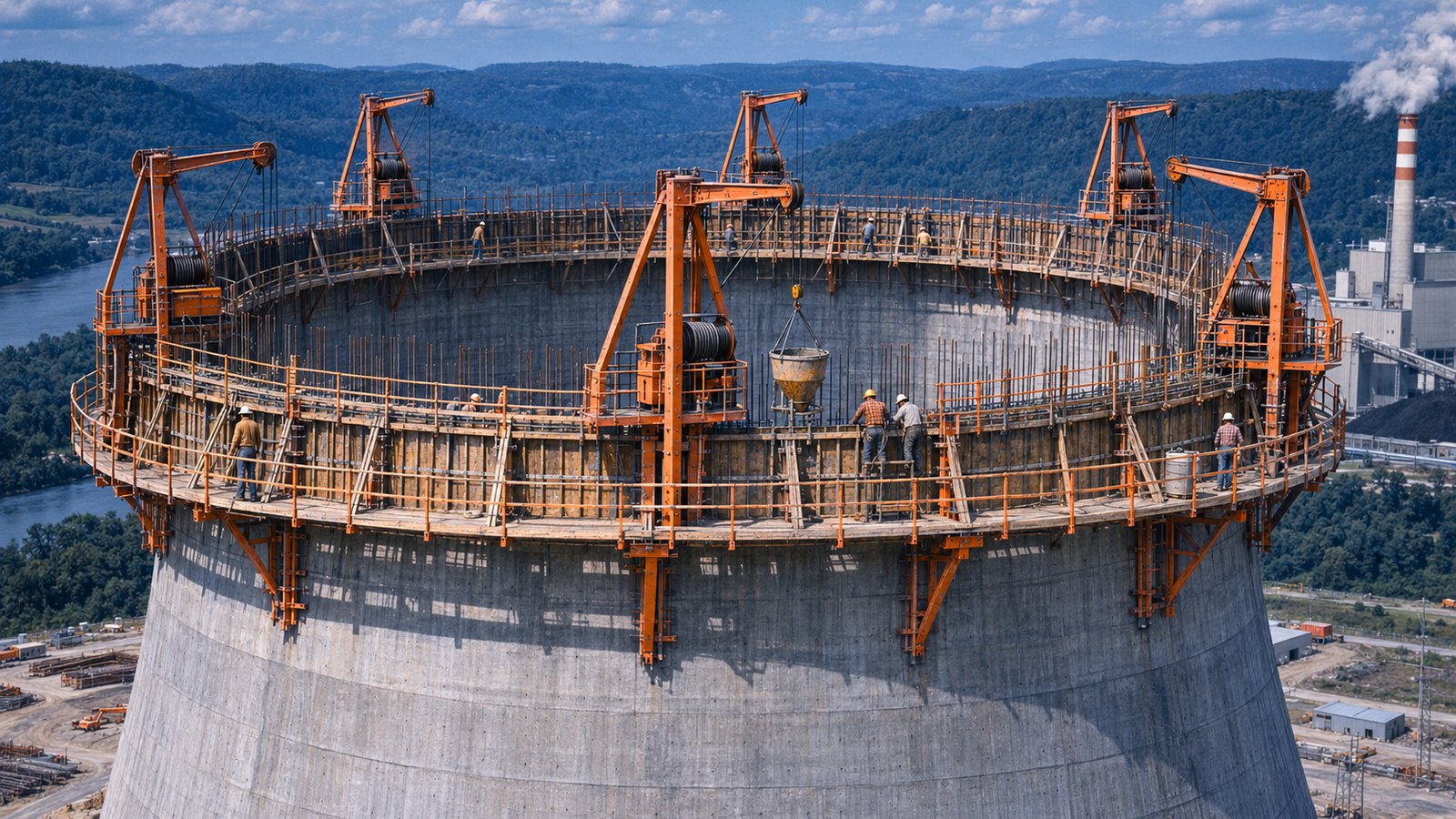
The cooling tower was being constructed in daily concrete lifts using a jump-form system. Inner and outer working platforms, formwork, scaffolding and concrete-hoisting equipment were supported by the recently completed upper section of the concrete shell.
At the time of failure, construction had reached approximately 51 metres. The temporary works were therefore relying on relatively young concrete to carry significant:
- Formwork and platform loads
- Worker and material loads
- Cathead and concrete-bucket hoisting forces
- Dynamic construction effects
What happened
Concrete Lift 28 had been placed the previous day. When work continued above it, the lift was required to support the jump-form system and hoisting operations before it had developed sufficient strength.
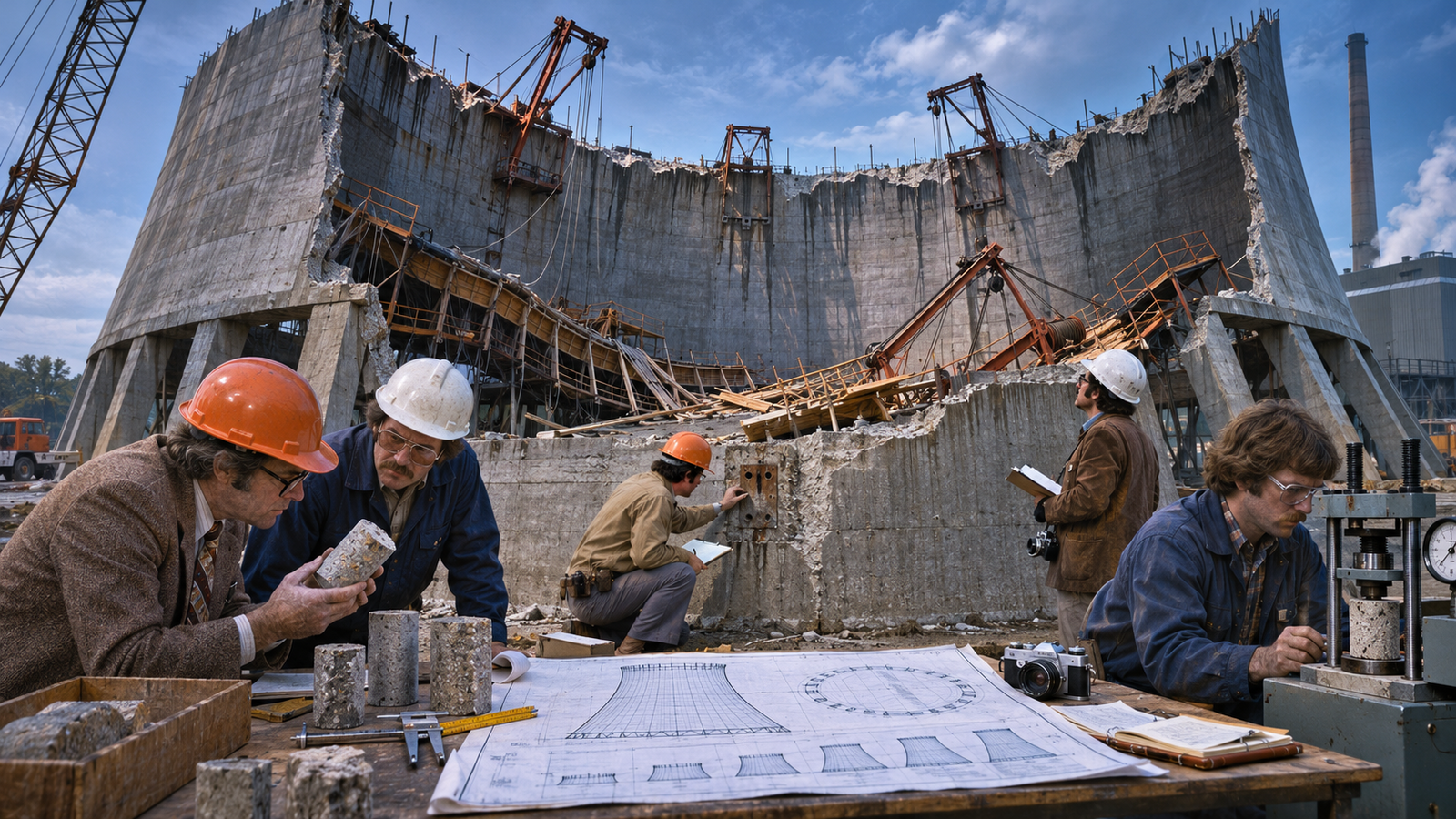
The investigation concluded that failure began near one of the cathead locations. The concrete shell then progressively separated around the circumference, bringing down the platforms, formwork and hoisting equipment.
Tests and structural analysis identified the most probable cause as the application of construction loads before the concrete had gained adequate strength. The investigation also found that the principal formwork, scaffolding and hoisting components had not failed first.
The temporary-works lesson
Concrete age alone does not confirm concrete strength. Temperature, mixture characteristics and curing conditions can significantly affect early strength development. Before climbing, loading or transferring temporary works onto newly placed concrete, the project should establish:
- The required in-place concrete strength
- An approved testing or maturity-monitoring method
- Clearly defined hold points
- Authorization before climbing or loading
- Checks covering all platform, hoisting and dynamic loads
- Contingencies for cold weather or delayed strength gain
The construction sequence must follow verified concrete strength, not simply the programme.
This article is provided for general education and does not replace project-specific design, approved procedures or professional review. The accompanying images are AI-generated educational reconstructions, not historical photographs.