Formwork: More Than a Mould for Concrete
TWInst Editorial Team · 3 min
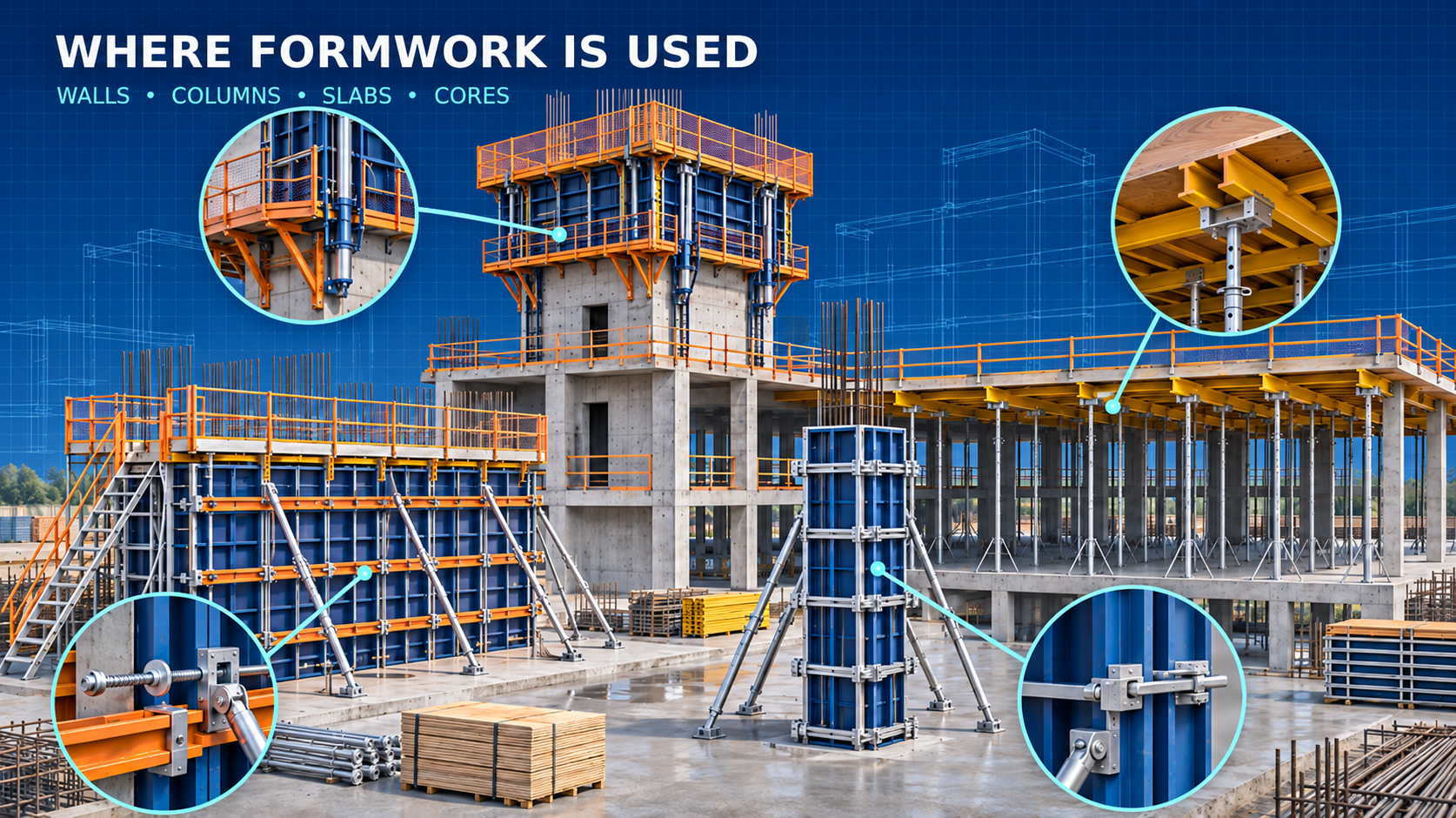
Formwork gives fresh concrete its required shape and temporarily supports it until the concrete can safely support itself. It is used for walls, columns, slabs, beams, foundations and many other concrete elements.
Although formwork is temporary, it carries real loads and should be planned, installed, inspected and removed in a controlled sequence.
Where is formwork used?
Different concrete elements require different arrangements. Wall and column systems mainly resist lateral fresh-concrete pressure, while slab and beam formwork transfer vertical loads into falsework or shoring below.
The selected system depends on the concrete geometry, surface finish, pour height, placement method, available equipment and construction sequence.
Main components
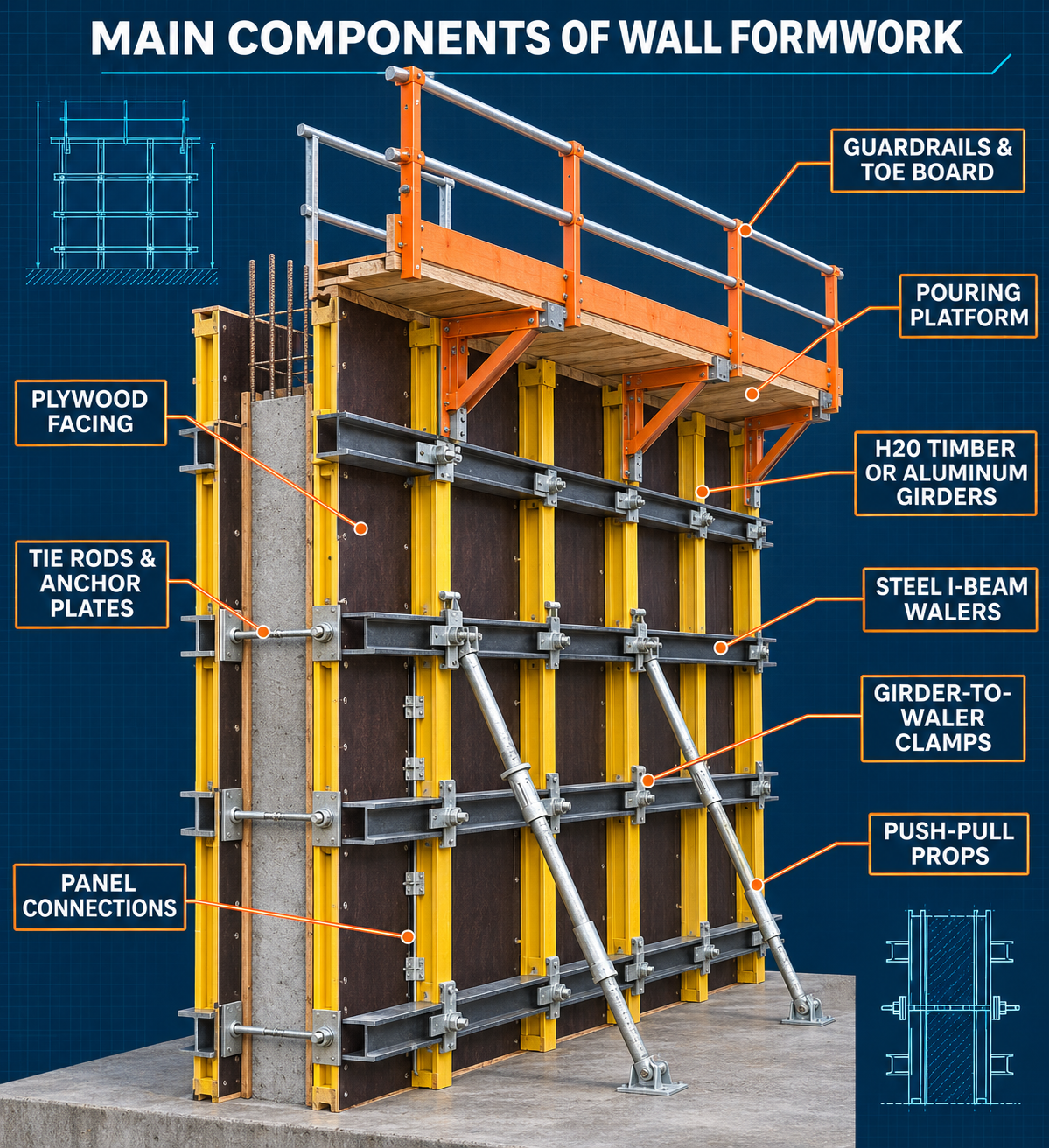
A typical double-sided wall-formwork system may include:
- Plywood or another concrete-facing material
- Timber H20 or aluminium girders
- Steel walers
- Tie rods and tie accessories
- Girder-to-waler clamps
- Push-pull props for alignment and erection stability
- Pouring platforms and edge protection
The facing receives the concrete pressure. Girders transfer it into the walers, while the tie rods connect the opposing panels and resist the resulting forces. Push-pull props help align and stabilize the panels during installation and before concrete placement.
How does formwork carry loads?
Fresh concrete behaves like a fluid during placement and creates lateral pressure against wall formwork. The pressure can be affected by factors such as concrete consistency, temperature, placement rate, vibration and pour height.
The load should follow a continuous path:
Concrete → Facing → Girders → Walers → Ties or anchors → Opposing formwork or supporting structure
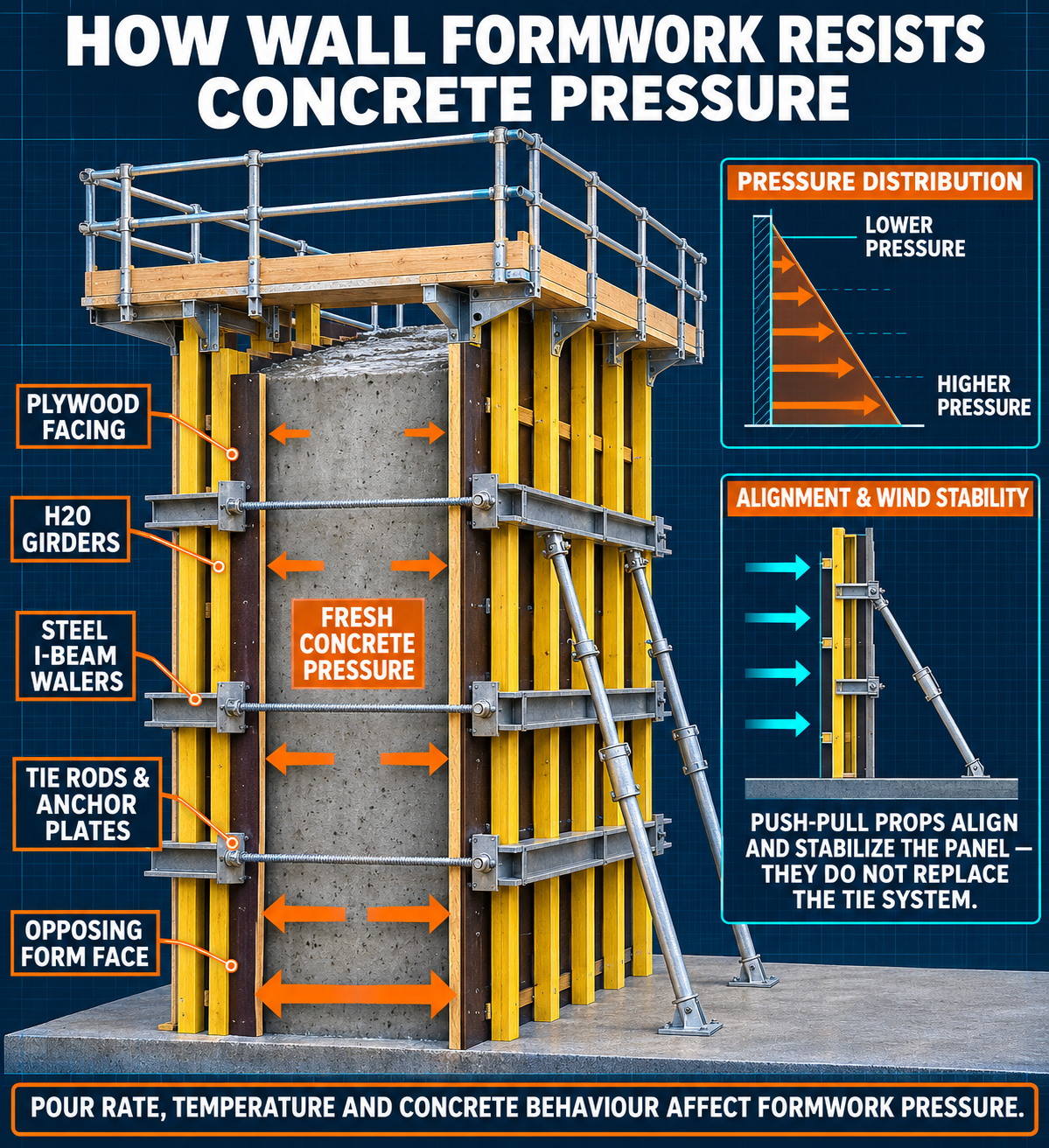
Every component and connection must remain within the assumptions of the approved formwork arrangement.
Before and during the pour
Before concrete placement, the formwork should be checked for:
- Correct dimensions, line and level
- Installed ties, clamps and connections
- Suitable bracing and base support
- Safe access and pouring platforms
- Clean and properly closed joints
- Completion of the required inspection or pour-release process
During placement, the concrete should be placed within the planned sequence and rate. Unexpected movement, leakage, deformation or loose components should be reported and assessed before continuing.
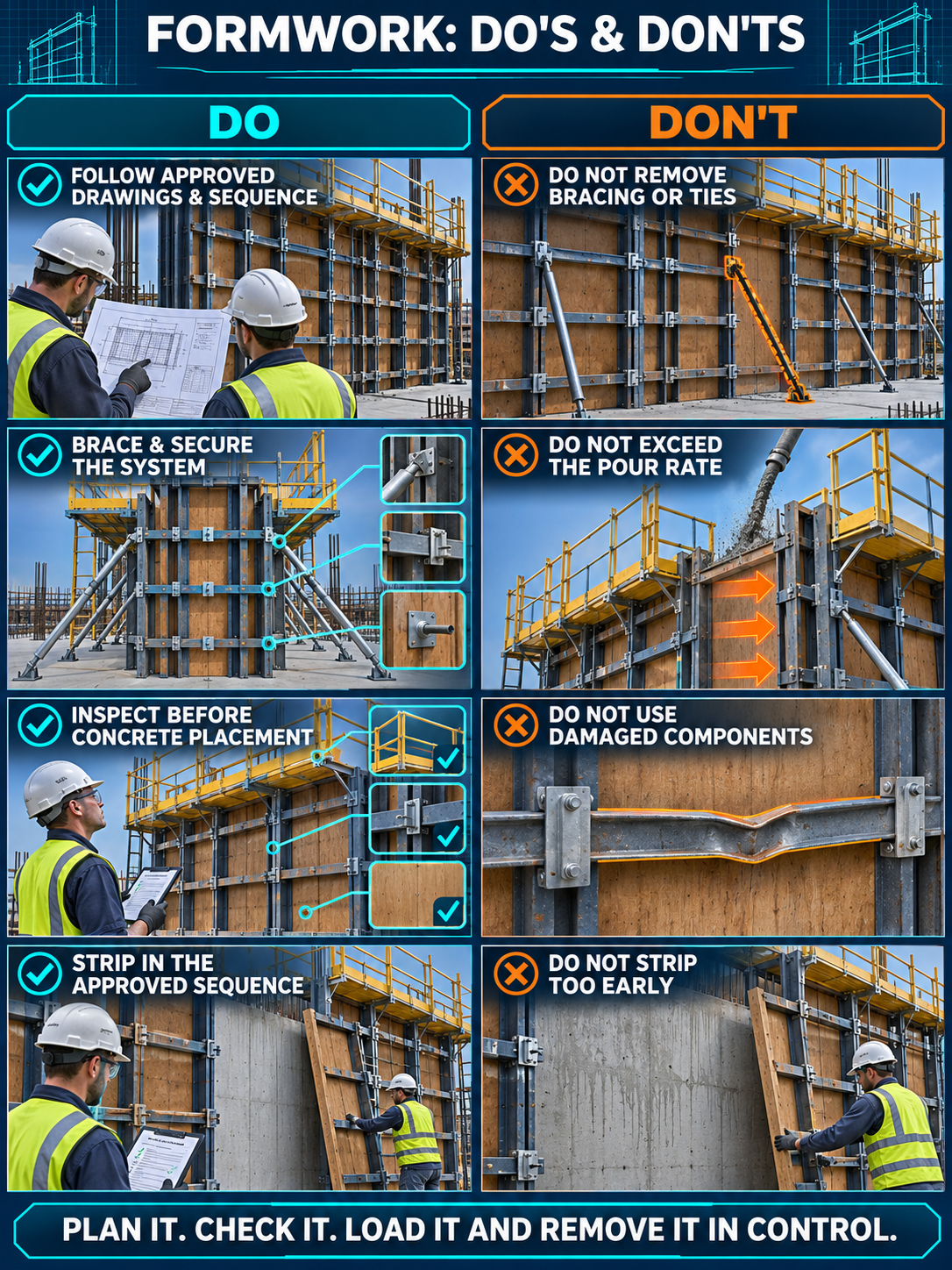
Formwork should not be modified, overloaded or stripped without the required review and authorization. Removal should follow the planned sequence and consider the concrete strength required at that stage.
Final takeaway
Formwork is not simply a surface around concrete. It is a temporary structural system that must safely transfer fresh-concrete pressure and construction loads through every component and connection.
This article provides general educational information. Project-specific work should follow approved drawings, applicable requirements, manufacturer instructions and the project’s temporary-works procedures.