Falsework and Shoring: Temporary Support for Construction Loads
TWInst Editorial Team · 3 min
Falsework and shoring temporarily support formwork, fresh concrete, structural elements or existing construction until the permanent structure can safely carry the required loads.
These systems may appear simple, but their performance depends on every beam, prop, frame, brace, connection and bearing surface working together.
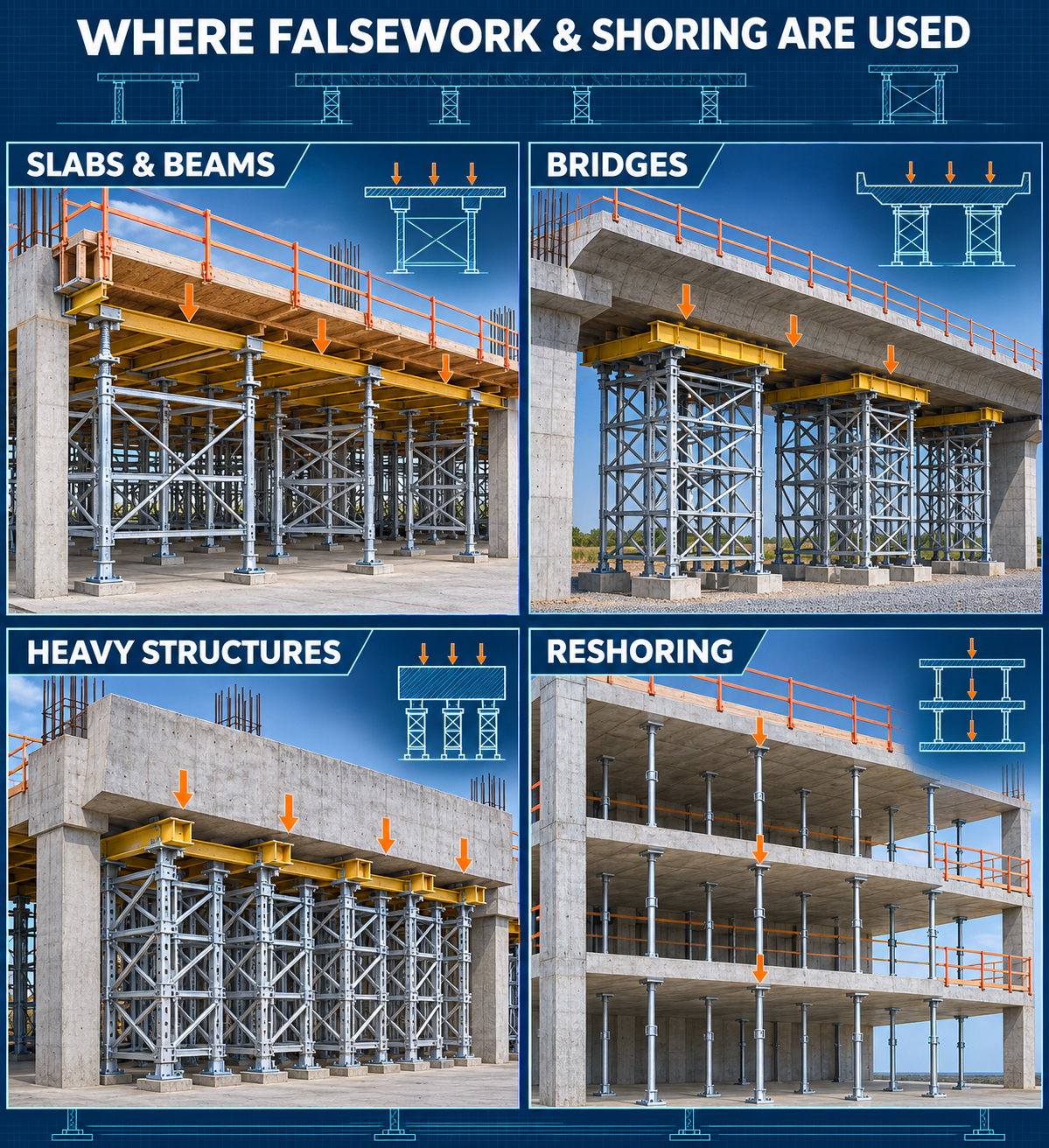
Where are they used?
Falsework and shoring are commonly used for:
- Concrete slabs and beams
- Bridge decks and pier caps
- Precast and structural elements during installation
- Temporary support of existing structures
- Reshoring or backpropping during multi-storey construction
- Heavy or irregular construction loads
The selected system may use adjustable props, shoring frames, support towers or specially designed steel arrangements.
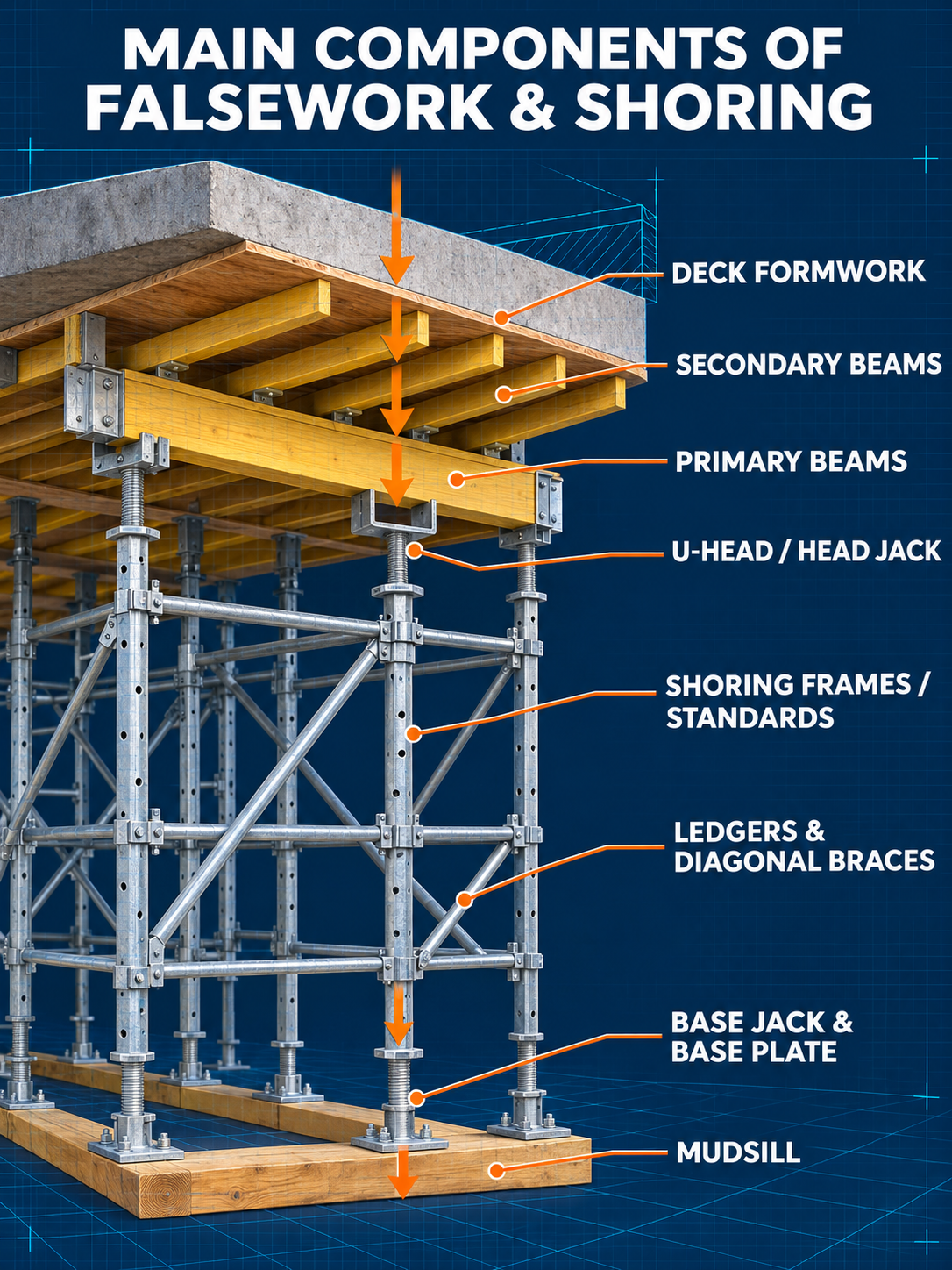
Main components
A typical system may include:
- Formwork decking and joists
- Primary supporting beams
- Adjustable heads or U-heads
- Props, frames or shoring towers
- Horizontal and diagonal bracing
- Base plates, mudsills or foundations
- Connections and adjustment devices
The supporting surface is part of the system. A correctly assembled tower can still be unsuitable if the slab, ground or foundation beneath it cannot carry the transferred load.
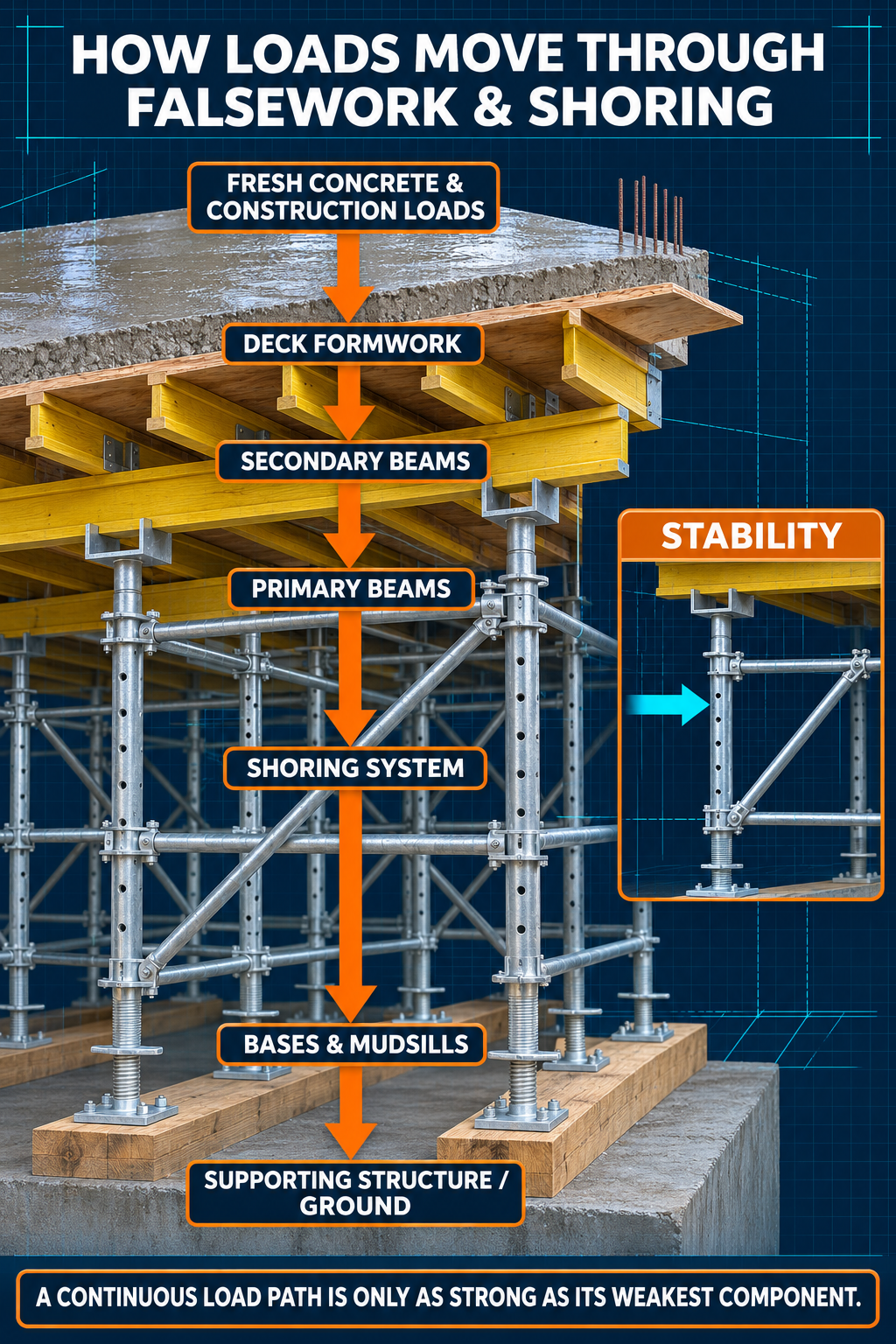
How do loads move?
For slab construction, loads generally travel through:
Fresh concrete and construction loads → Formwork → Joists → Primary beams → Props or frames → Base plates and mudsills → Supporting slab or ground
In multi-storey construction, these loads may continue through several floors. Reshoring or backpropping may therefore be required to distribute construction loads until the concrete has developed sufficient strength.
Before loading the system
Before use, the project team should confirm:
- The system matches the approved drawings and intended configuration
- Props, frames and towers are vertical and correctly spaced
- Required bracing and connections are complete
- Heads and bases are properly centred
- The supporting surface is suitable
- Adjustments remain within the permitted limits
- The loading and concrete-placement sequence is understood
- The required inspection and release have been completed
Where required by the project procedure, a permit to load or use, or an equivalent documented release, should be issued before construction loads are applied.
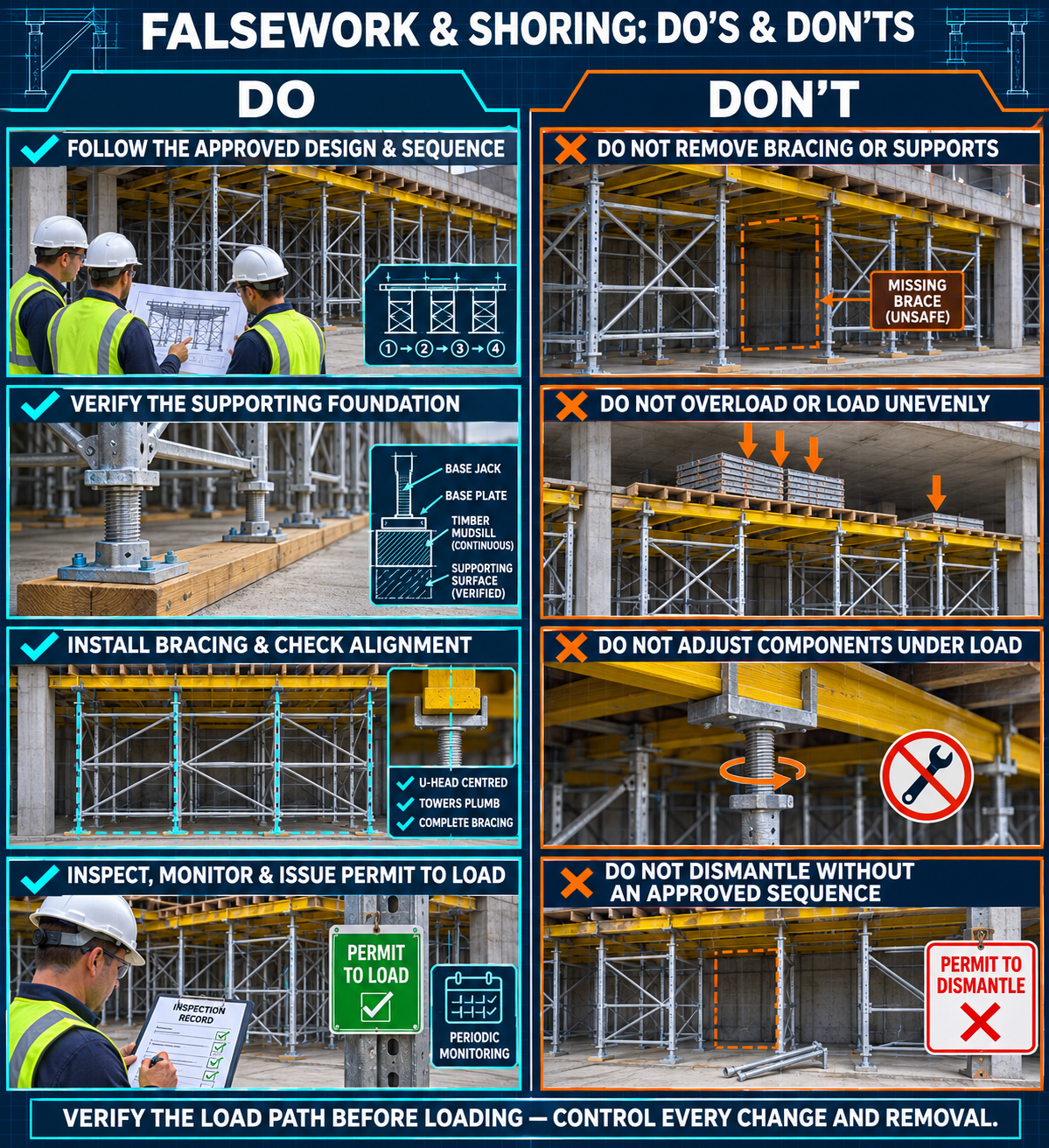
Components should not be removed, displaced or altered without review. Dismantling should follow the approved sequence and begin only after confirmation that the permanent structure and any remaining supports can safely carry the resulting loads.
Where used by the project, this may be controlled through a permit to dismantle or an equivalent formal authorization.
Final takeaway
Falsework and shoring are only temporary in duration. Structurally, they carry real loads and require the same attention to load paths, stability, foundations, inspections and controlled removal as other construction systems.
This article provides general educational information. Project-specific work should follow approved drawings, applicable requirements, manufacturer instructions and the project’s temporary-works procedures.