Scaffolding: Temporary Access That Must Remain Stable
TWInst Editorial Team · 3 min
Scaffolding provides temporary access and working platforms for construction, inspection, maintenance and repair activities.
Although it is mainly used for access, scaffolding is also a temporary structure that must safely carry workers, materials, equipment, wind and other construction loads.
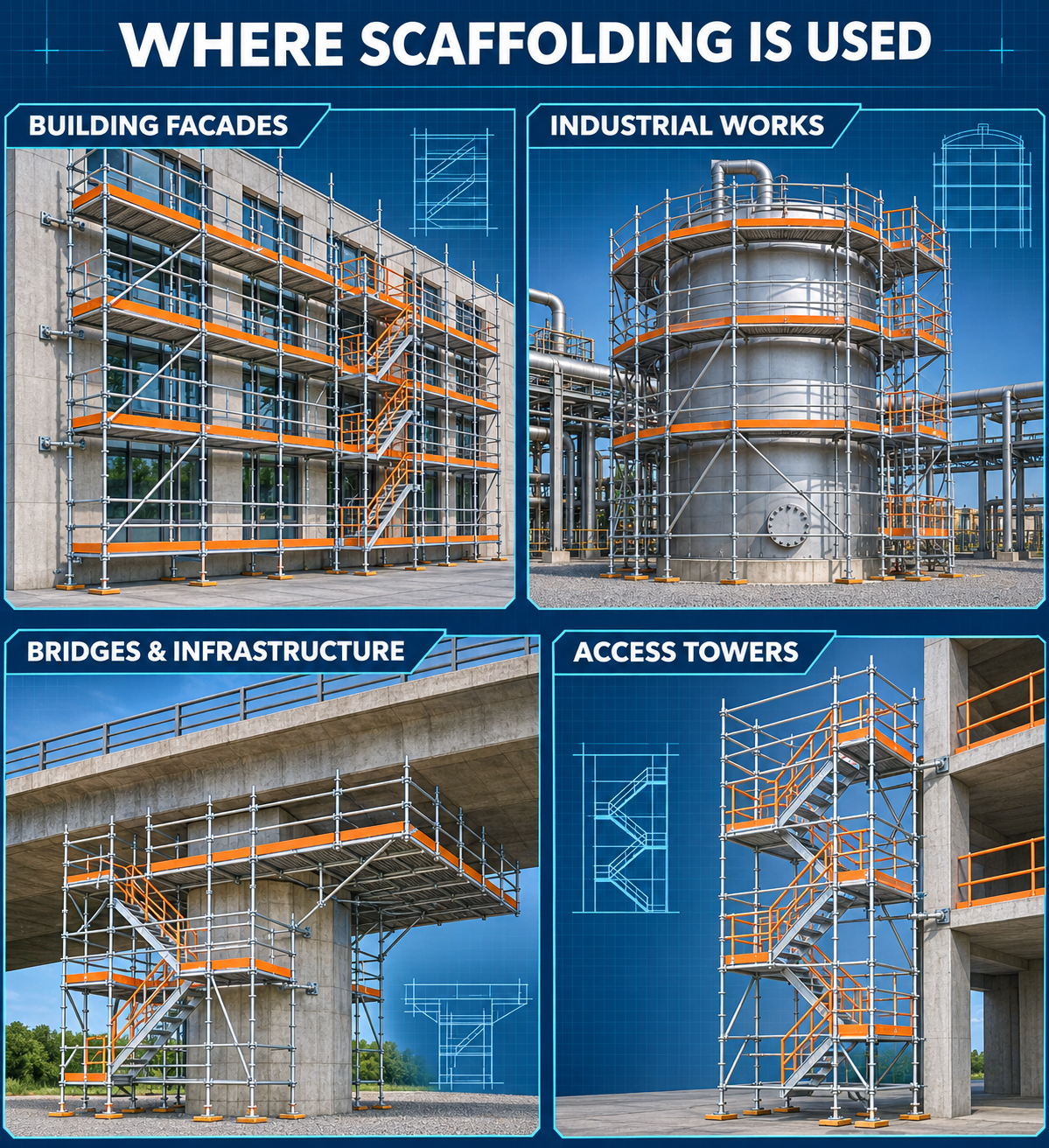
Where is scaffolding used?
Common applications include:
- Building façades
- Access and stair towers
- Birdcage scaffolds for ceilings and soffits
- Loading bays and material platforms
- Industrial maintenance and inspections
- Temporary access around bridges and structures
The scaffold type and configuration should reflect its intended use, required height, loading, surrounding conditions and access needs.
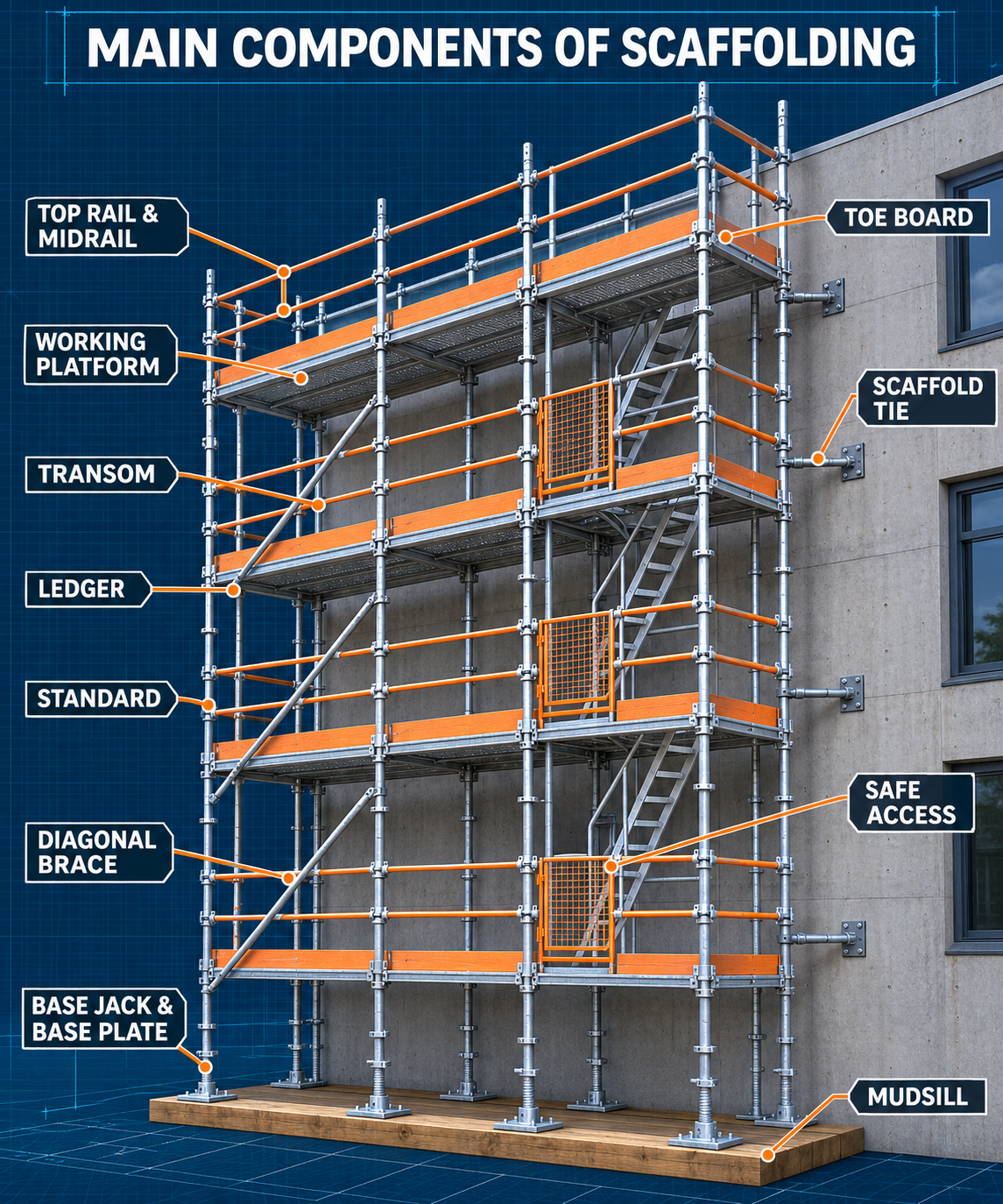
Main components
A typical scaffold may include:
- Standards or vertical members
- Ledgers and transoms
- Diagonal bracing
- Base plates and mudsills
- Scaffold ties and anchors
- Working platforms
- Guardrails, midrails and toe boards
- Safe ladder or stair access
Each component has a specific function. Standards carry vertical loads, ledgers and transoms support and connect the system, bracing provides stability, and ties transfer lateral forces into the supporting structure.
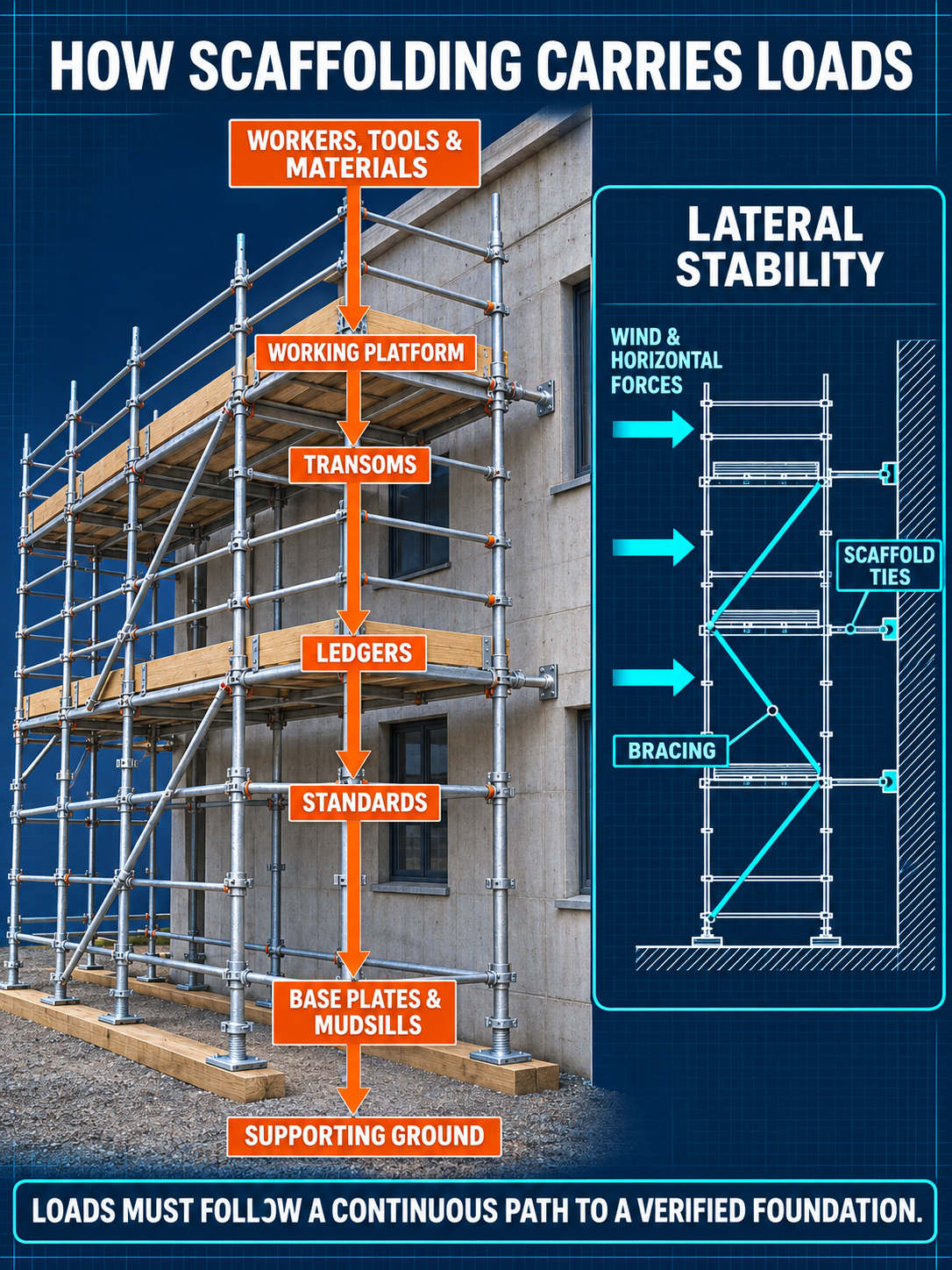
How does scaffolding carry loads?
Vertical loads generally travel through:
Workers and materials → Platforms → Transoms → Ledgers and standards → Base plates and mudsills → Supporting surface
Wind and other lateral forces are controlled through the scaffold bracing, ties and anchors.
If the bases settle, ties are removed or the system is incomplete, the stability of the entire scaffold may be affected.
Before using the scaffold
The project team should confirm:
- The scaffold matches the intended configuration
- The supporting surface is stable and level
- Base plates and mudsills are correctly positioned
- Bracing, ties and anchors are complete
- Platforms are properly installed and secured
- Guardrails and toe boards are provided where required
- Safe access is available
- Materials remain within the permitted loading
- The required inspection and handover have been completed
Scaffolding should be inspected before first use, following significant alteration and after events that may affect its condition or stability.
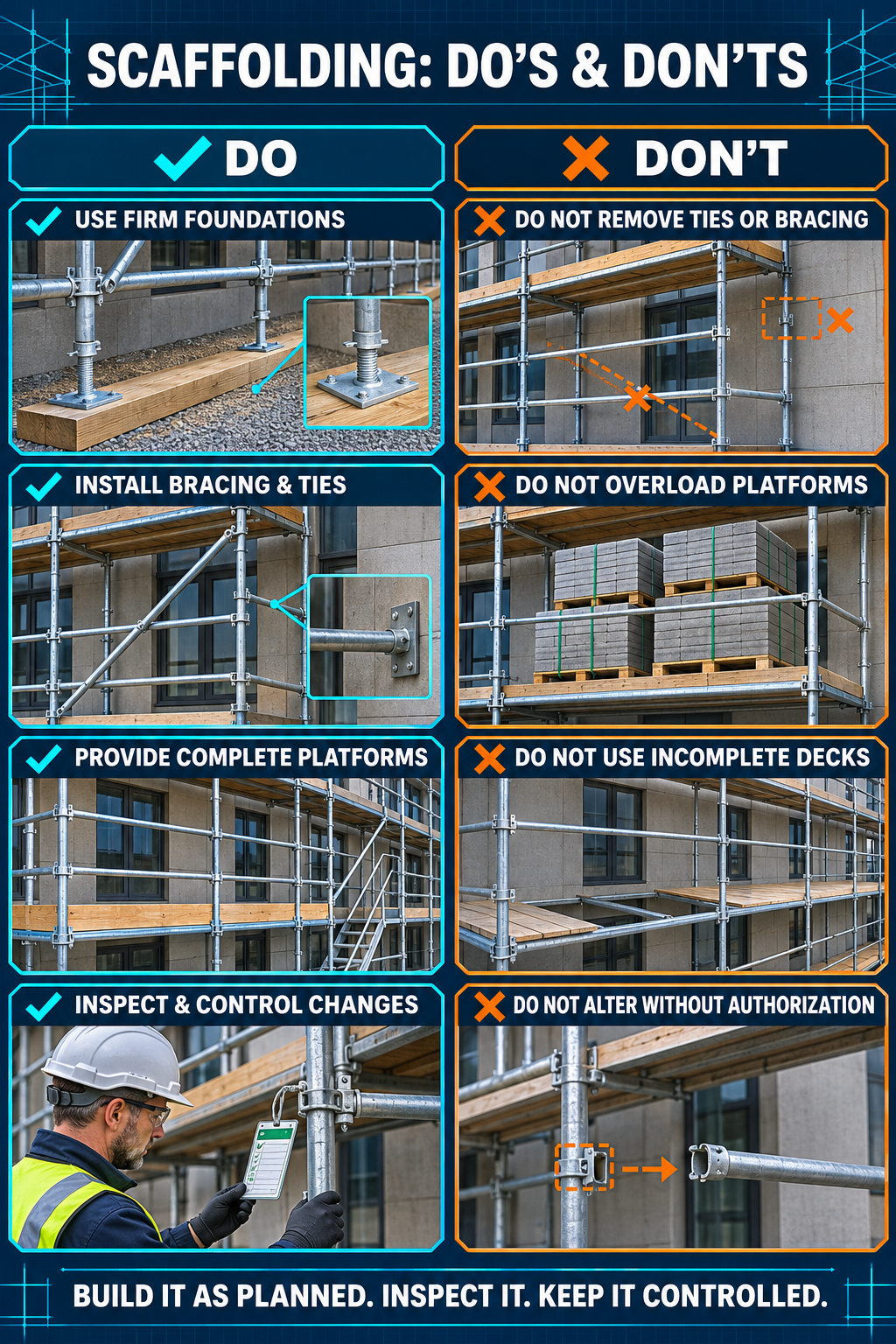
Ties, braces, guardrails and structural components should not be removed or modified without authorization. Materials should not be stored on platforms unless the scaffold has been configured for the intended loading.
Final takeaway
A scaffold is more than a temporary platform. It is a complete structural system that depends on suitable foundations, correct assembly, effective bracing, secure ties, controlled loading and regular inspection.
This article provides general educational information. Project-specific work should follow applicable requirements, approved drawings, manufacturer instructions and the project’s scaffolding and temporary-works procedures.