Lifting-Related Temporary Works: The Support Behind Every Lift
TWInst Editorial Team · 3 min
A lifting operation involves more than the crane, rigging and suspended load. The crane must stand on a suitable surface, concentrated reactions must be distributed safely, lifted elements may require temporary landing supports, and newly installed components often need bracing until permanent stability is achieved.
These supporting arrangements are commonly treated as lifting-related temporary works.
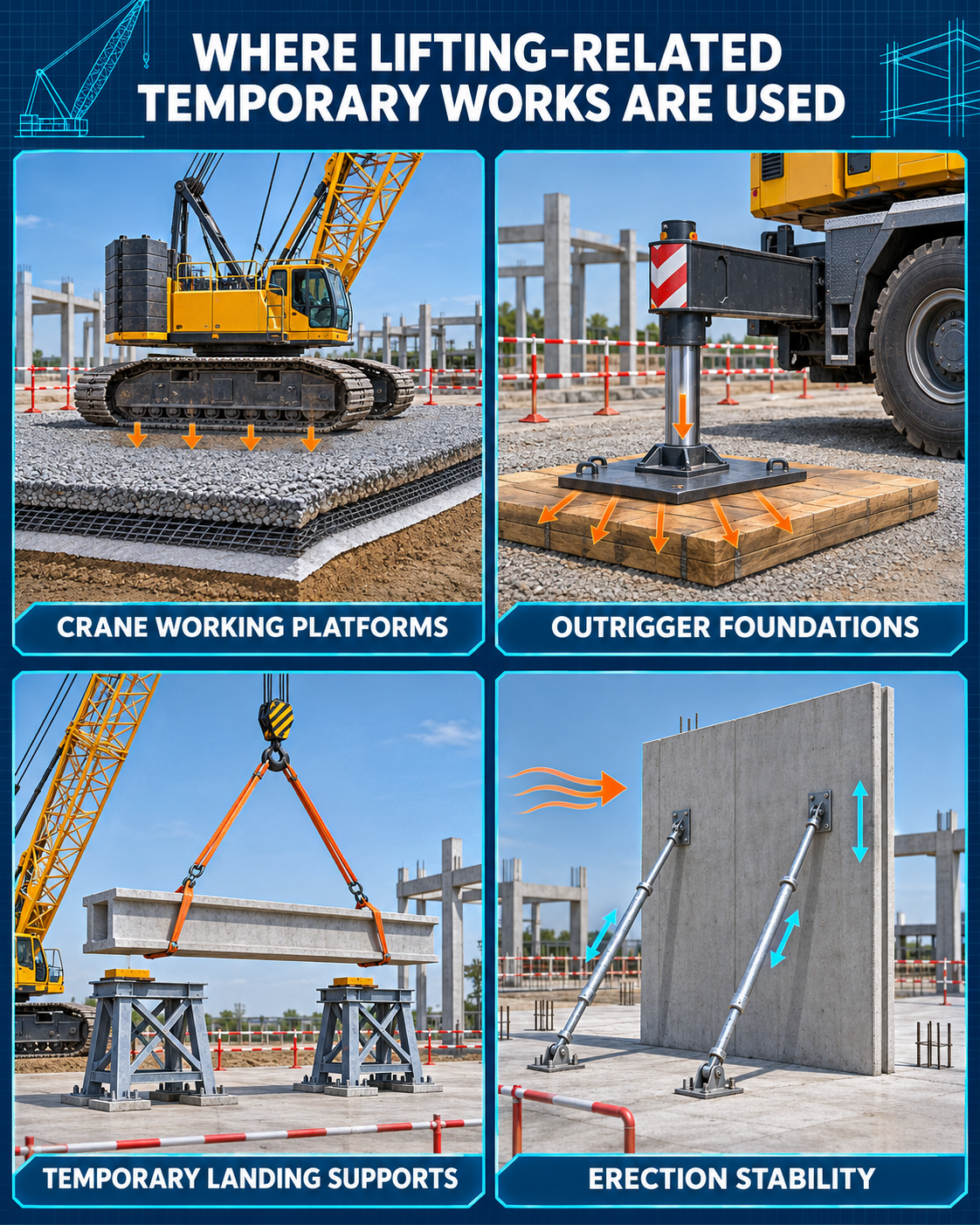
Where are they used?
Common applications include:
- Engineered working platforms for crawler cranes
- Outrigger mats, spreader plates and supporting surfaces
- Temporary trestles or stools for landing lifted elements
- Temporary bracing for precast panels and structural components
- Temporary lifting frames or attachments where classified as temporary works under the project procedure
The exact classification may vary between projects. What matters is that every temporary supporting arrangement is identified, planned and controlled.
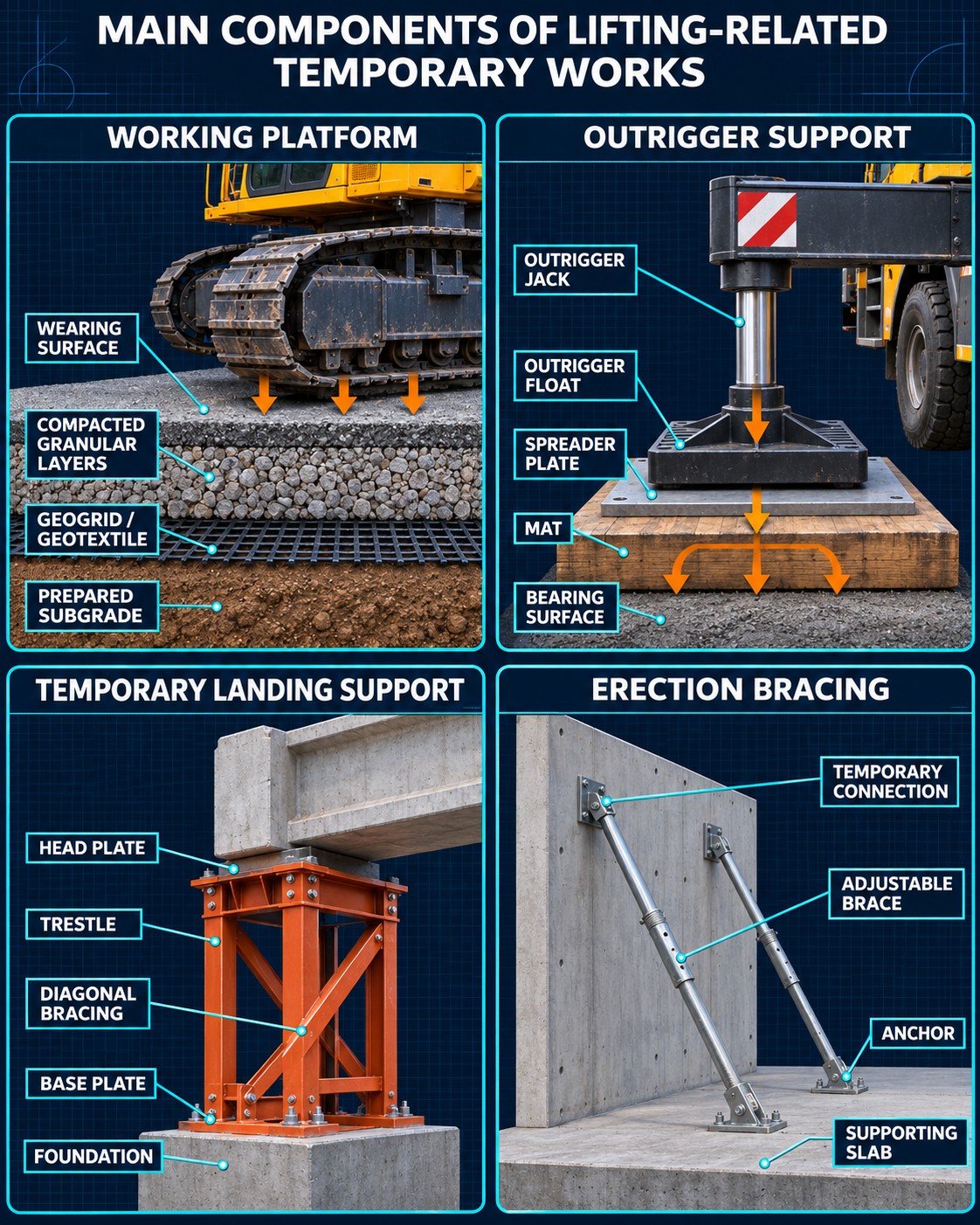
Main components
The components depend on the application. A working platform may include compacted granular layers, geogrid or geotextile and prepared subgrade. An outrigger arrangement may include the jack, float, spreader plate, mat and bearing surface.
Temporary landing supports may require head plates, braced trestles, base plates and foundations. Erection stability systems commonly include temporary connections, adjustable braces, anchors and a supporting slab or structure.
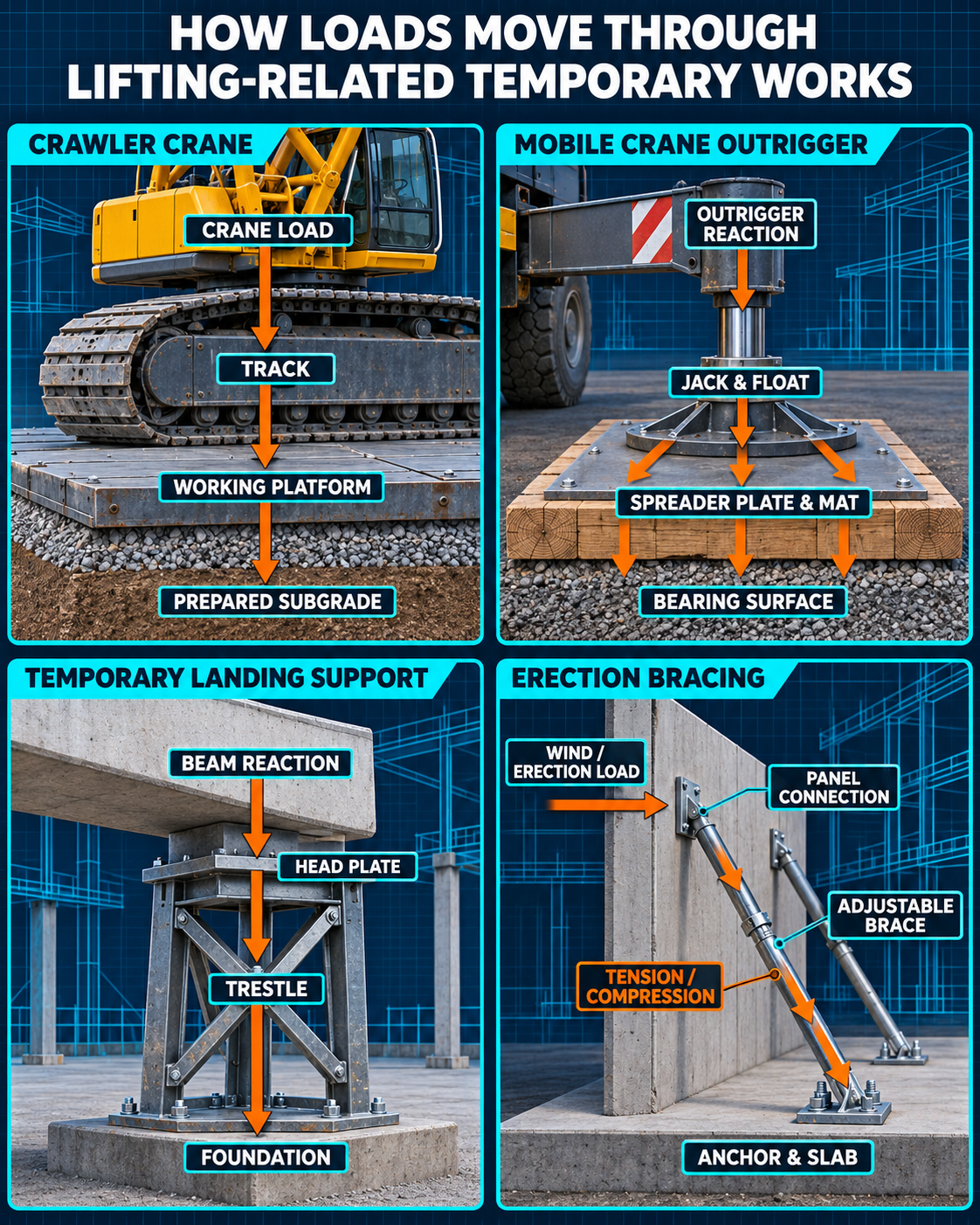
Follow the load path
Each system must transfer its loads continuously to something capable of carrying them.
For a crawler crane, loads travel through the tracks, working platform and underlying ground. For a mobile crane, concentrated outrigger reactions pass through the float, spreader system and supporting surface.
When an element is landed, its reaction passes through the temporary trestle into the foundation. During erection, wind and construction forces may travel from the installed element through temporary braces, anchors and the supporting structure.
If one connection, bearing point or supporting layer is unsuitable, the complete load path may be affected.
Planning and control
Before the system is used, the project team should establish:
- Crane reactions and the intended equipment configuration
- Available information about soil, backfill, underground services, voids and nearby excavations
- The required working platform, mat or temporary-support arrangement
- Installation, inspection, use and removal sequences
- Responsibilities for design, review, installation and field verification
- Hold points and authorization required before loading or removing the system
- Controls for changes in equipment, position, loading or site conditions
Where required by the project procedure, a permit to load or use, or an equivalent documented release, should be completed before loading. Temporary landing supports or erection braces should not be removed until the responsible parties confirm that the permanent structure has achieved the required stability.
Ontario’s Construction Projects Regulation requires crane outriggers or stabilizing devices to meet the applicable load-chart extension, rest on adequate blocking and be set up after ground-bearing pressure has been considered. WorkSafeBC similarly requires mobile cranes and boom trucks to operate on capable supporting surfaces, with a qualified person determining the setup location when adjacent to excavations, slopes or backfilled areas.
Basic Do’s and Don’ts
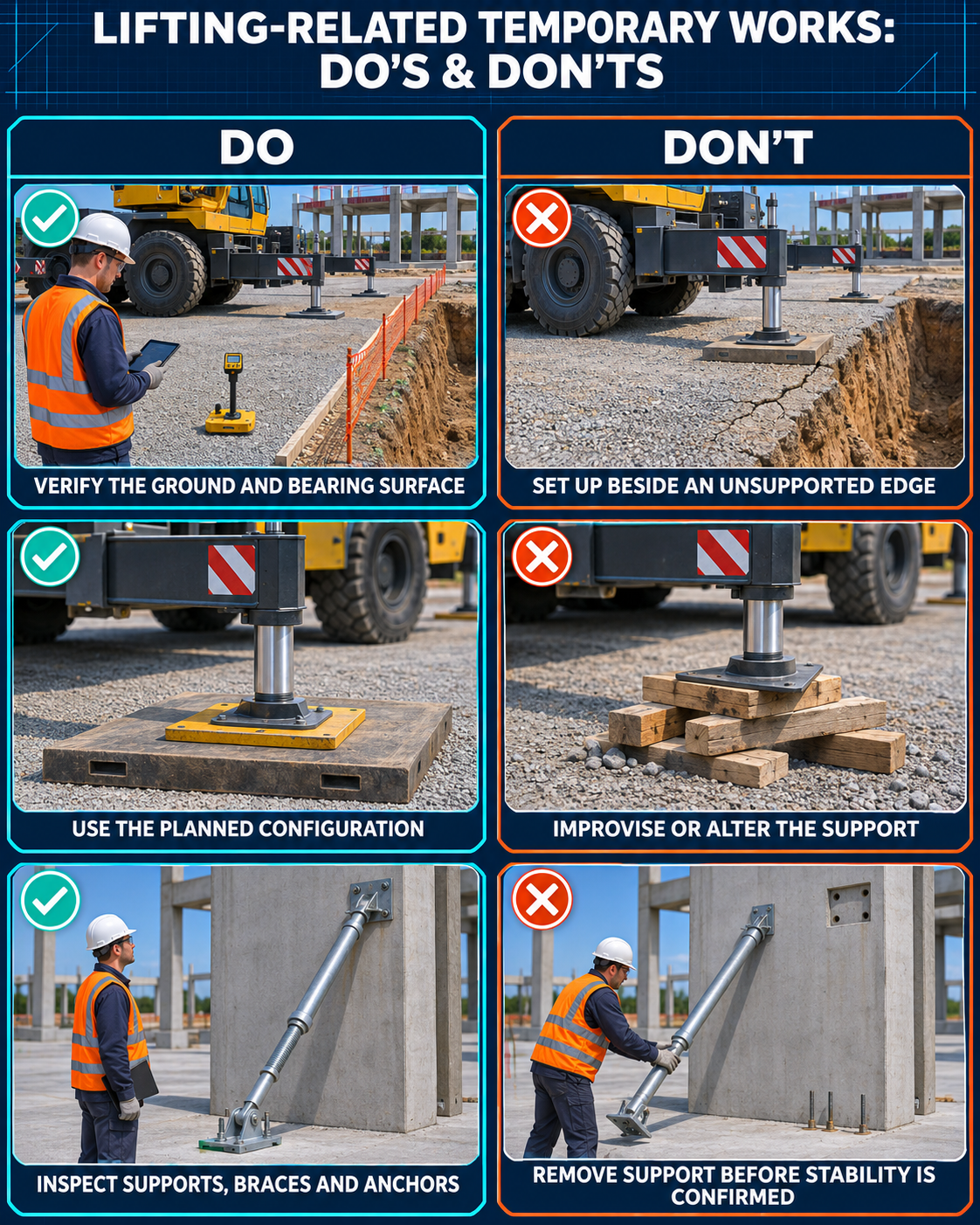
Verify the supporting surface, use the planned configuration and inspect the system before use. Do not improvise support arrangements, position equipment beside an unsupported edge or remove temporary supports before stability is confirmed.
Final takeaway
A lifting-related temporary work may only be needed briefly, but during that period it carries real loads and performs a critical structural function. Safe lifting begins with a clear load path, suitable support and controlled temporary stability.
This article provides general educational information. Project-specific arrangements should follow applicable legislation, approved documents, manufacturer requirements and the project’s temporary-works and lifting procedures.