Skyline Plaza Collapse: When Shoring Was Removed Too Soon
TWInst Editorial Team · 4 min
On 2 March 1973, part of the Skyline Plaza apartment building collapsed during construction in Fairfax County, Virginia. Fourteen workers were killed and 34 were injured.
The construction sequence
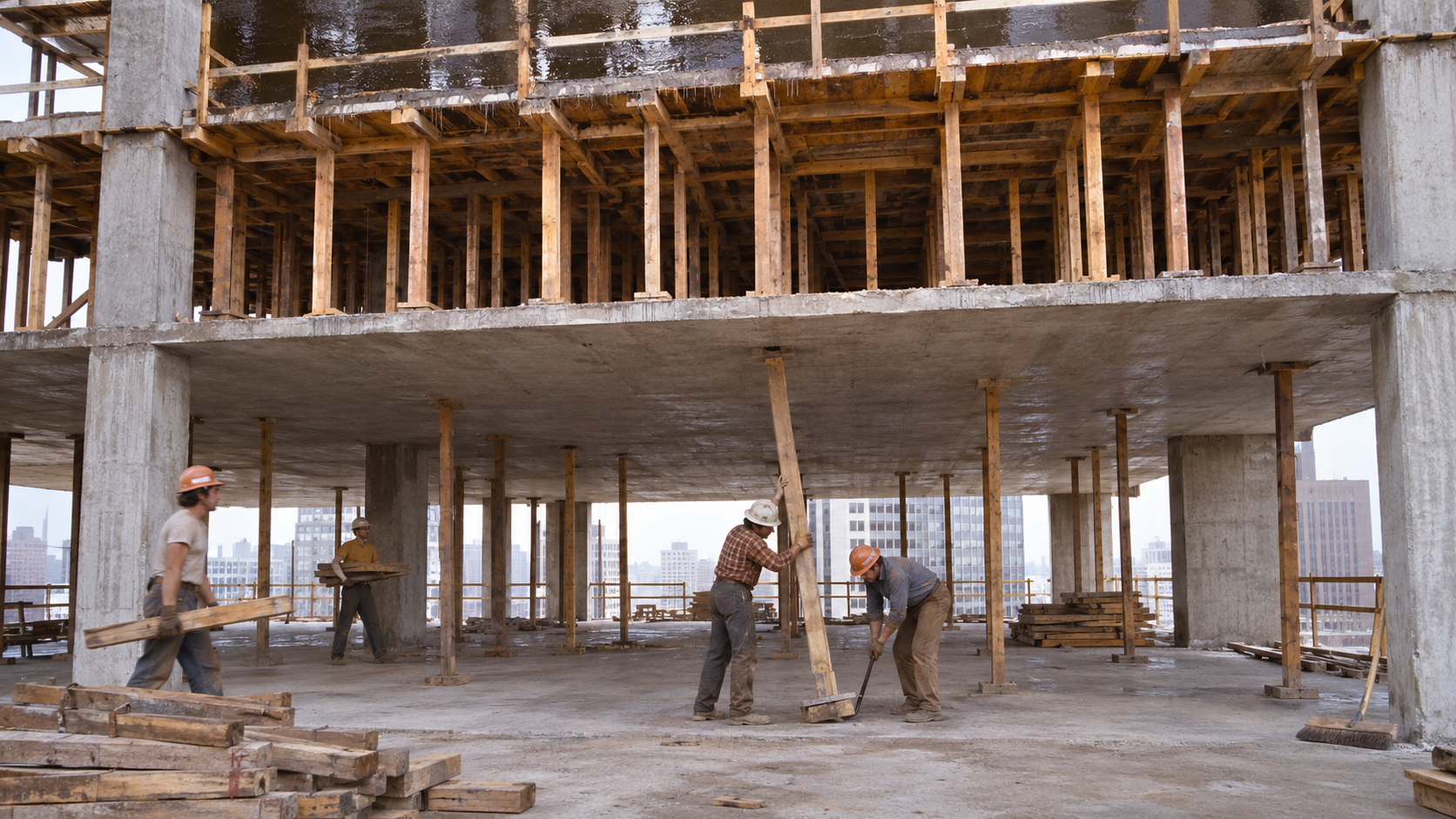
The building used cast-in-place reinforced-concrete flat slabs. During construction, recently poured floors depended on temporary shoring and reshoring to transfer loads safely through the lower floors.
The structural drawings required:
- Two floors of full shoring beneath the slab being poured
- An additional floor of backpropping or reshoring
- Supporting forms to remain until the concrete had sufficient strength
This temporary support system was essential because young concrete could not necessarily carry its own weight together with the loads from the floors being constructed above.
What happened
At the time of the collapse, concrete was being placed at the upper levels while forms and shores were reportedly being removed below.
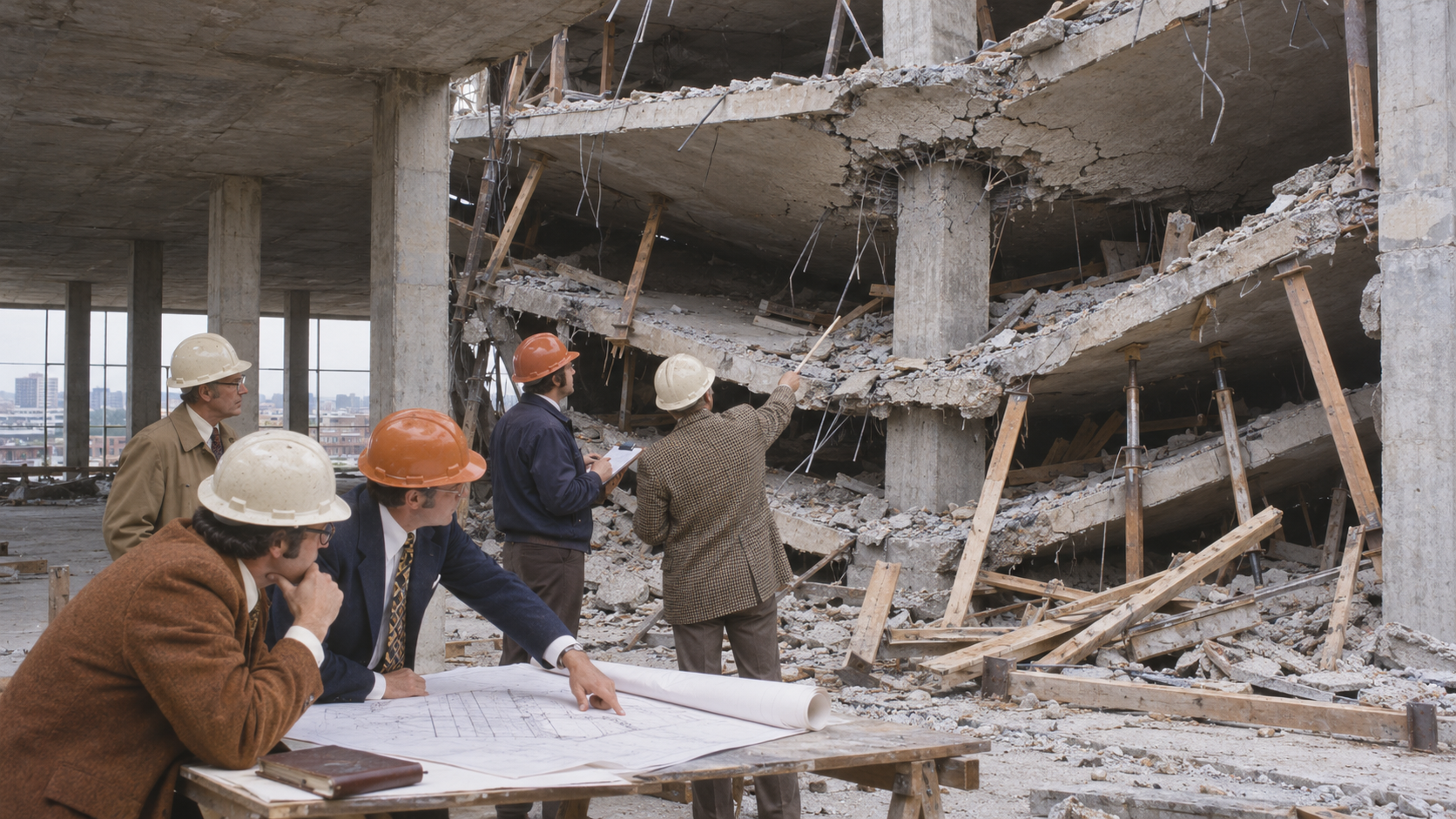
The investigation found that the 23rd-floor slab was approximately four days old and had not developed sufficient strength. Partial or complete removal of supporting shores below this slab allowed it to carry loads from the floor above without adequate temporary support.
Failure most likely began as a shear failure around one or more columns on the 23rd floor. The falling debris then overloaded the floors below, producing a progressive collapse through much of the building.
Key contributing factors
The National Bureau of Standards identified premature formwork removal as a contributing factor. Its investigation also highlighted:
- Insufficient strength of the recently cast concrete
- Removal of shoring contrary to the specified sequence
- Inadequate verification before removing temporary support
- No evidence that field-cured concrete specimens were used to confirm strength
- Failure to maintain the required number of supported floors
The investigation concluded that removing the shores could have caused a punching or shear failure in the young slab.
The temporary-works lesson
Formwork removal is a designed construction stage, not simply a routine site activity. Before removing shores or reshores, the project should confirm:
- The approved stripping and reshoring sequence
- The required in-place concrete strength
- Actual strength results from an accepted verification method
- Loads from ongoing construction above
- The required number of fully shored and reshored floors
- Formal authorization to remove the temporary support
Never remove shores based only on concrete age or programme pressure. Follow the approved sequence and verify the required strength first.
This article is provided for general education and does not replace project-specific design, approved procedures or professional review. The accompanying images are AI-generated educational reconstructions, not historical photographs.