The Collapse That Changed Temporary Works
TWInst Editorial Team · 4 min
The modern temporary-works discipline did not result from one incident alone. It developed after several serious falsework failures revealed weaknesses in design, construction, inspection and responsibility.
Birling Road Bridge: 22 March 1971
During concreting of an overbridge in Kent, the supporting falsework collapsed. One worker was killed and others were injured. The incident increased concern about the limited and inconsistent guidance then available for falsework.
Loddon Viaduct: 24 October 1972
The decisive event occurred while constructing the viaduct over the River Loddon near Reading. The falsework collapsed during concrete placement, killing three workers and injuring ten.
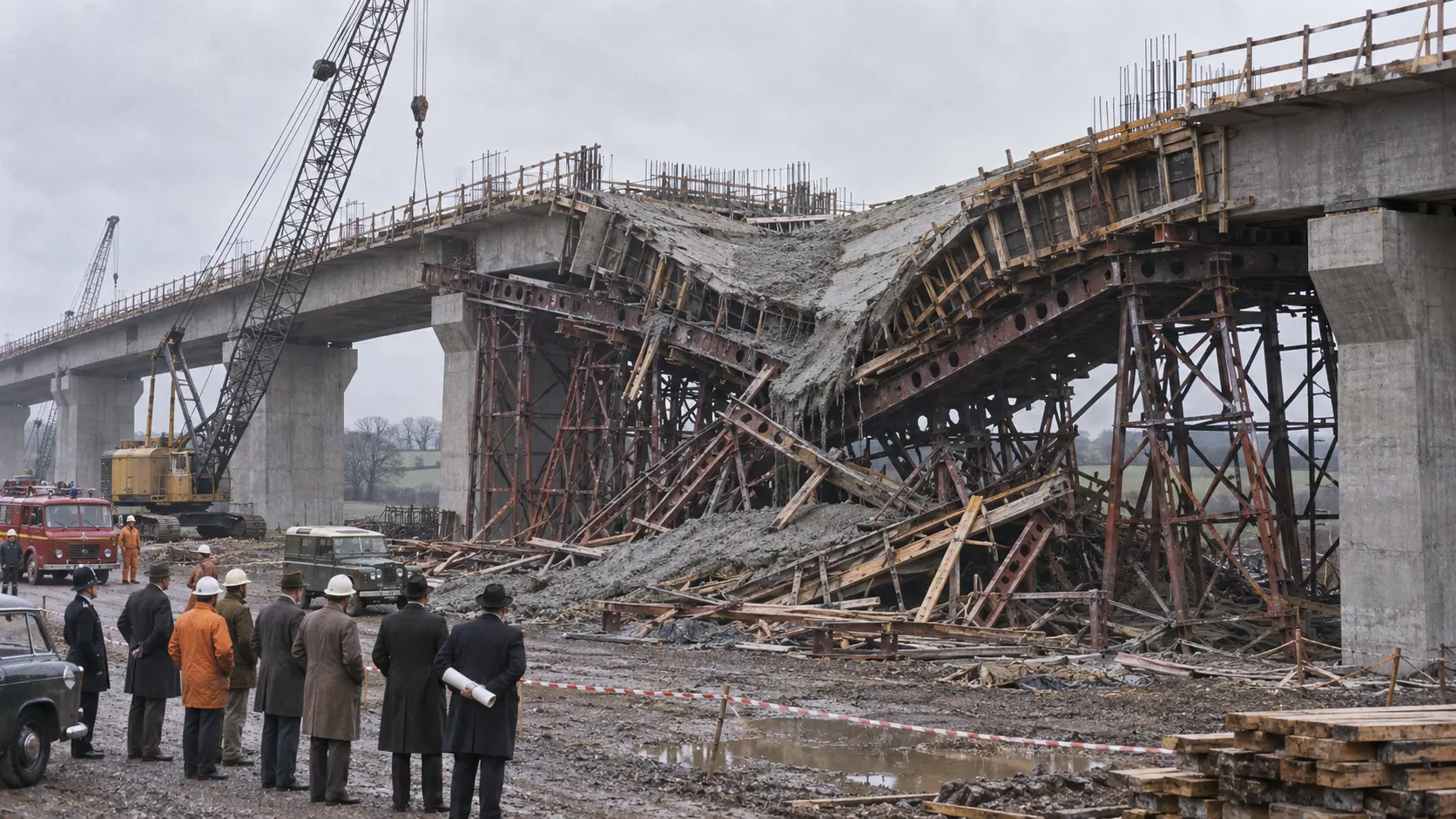
The investigation identified serious concerns, including:
- Insufficient consideration of stability and horizontal forces
- Damaged components being straightened and reused
- Missing or inadequate bolts
- Weaknesses in supporting grillages
- Problems created when the falsework was moved and reused
- An inadequate final inspection before concreting
The report concluded that the combined deficiencies reduced the structure's overall safety below an acceptable level.
From tragedy to the Bragg Report
In March 1973, the UK government established the Advisory Committee on Falsework under Professor Stephen Bragg. Its purpose was not only to improve calculations, but also to address how falsework was designed, checked, erected, inspected and controlled.
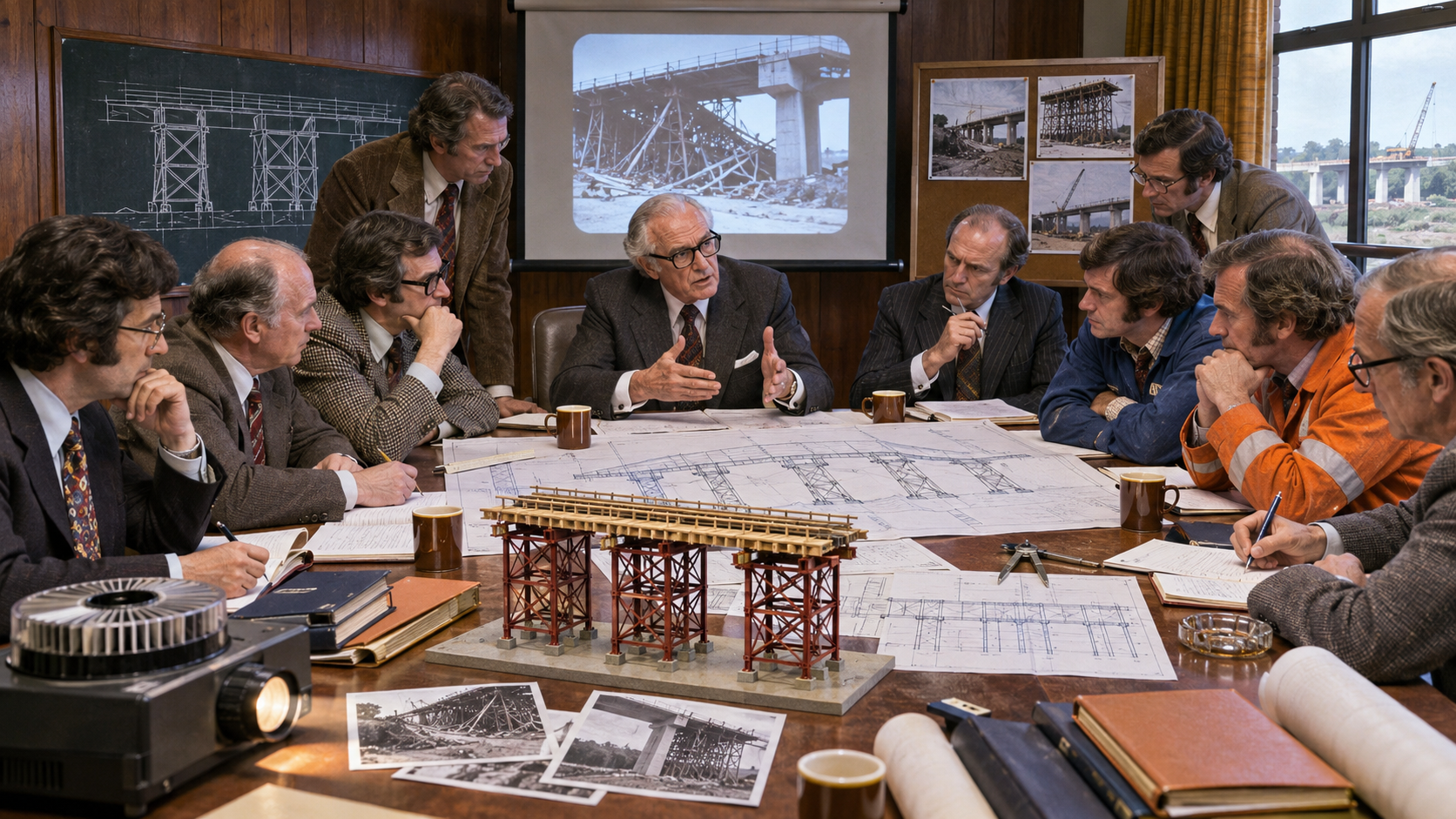
The Bragg Report, published in 1975, promoted several lasting principles:
- One person should coordinate the process.
- Designs and calculations should be properly prepared.
- Designs should receive an appropriate check.
- Construction should follow the approved design.
- Loading should not begin before inspection and authorization.
- Alteration and removal should be controlled.
From the Bragg Report to BS 5975
The recommendations influenced the first BS 5975, published in 1982. The standard combined technical requirements with management procedures and introduced the coordination role that later developed into the Temporary Works Coordinator.
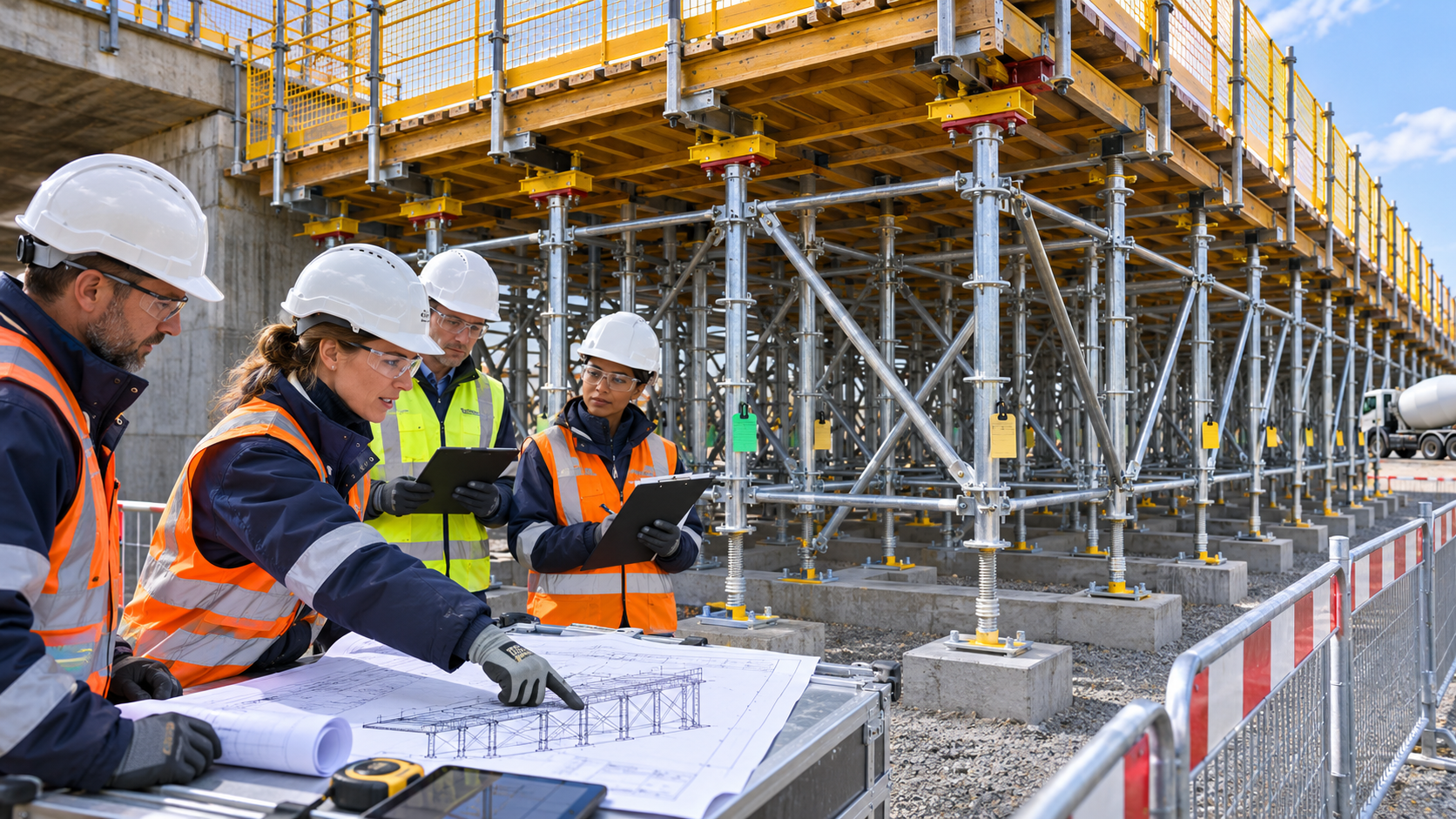
Today, the standard has evolved into:
- BS 5975-1:2024: Management procedures for temporary works
- BS 5975-2:2024: Falsework design and implementation
The failures were not caused by mathematics alone. They resulted from gaps between design, construction, inspection and responsibility.
This article is provided for general education and does not replace project-specific design, approved procedures or professional review. The accompanying images are AI-generated educational reconstructions, not historical photographs.