Big Blue Crane Collapse: When Wind Changed the Lift
TWInst Editorial Team · 4 min
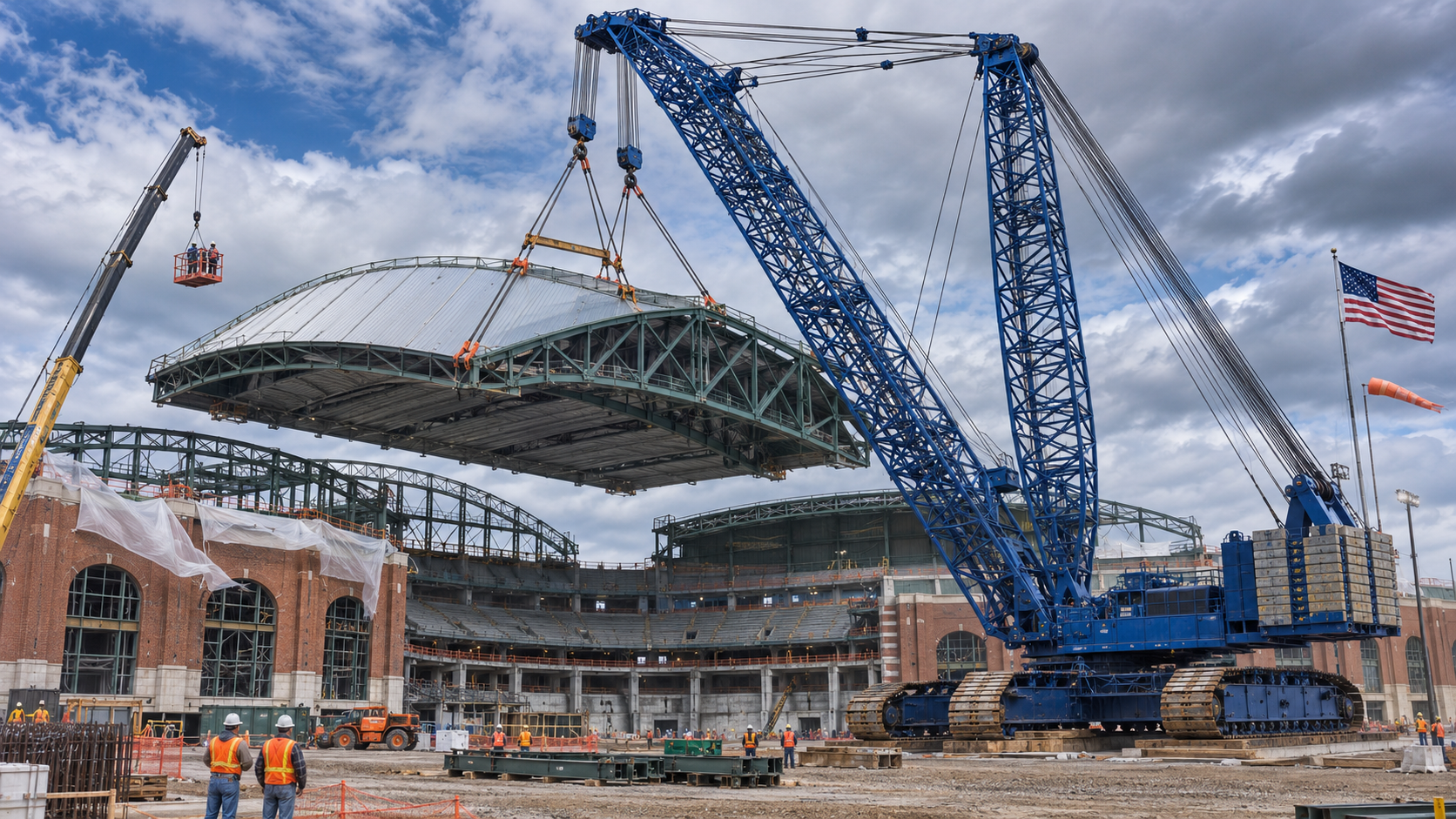
On 14 July 1999, a large heavy-lift crane known as Big Blue collapsed during construction of Miller Park in Milwaukee, Wisconsin.
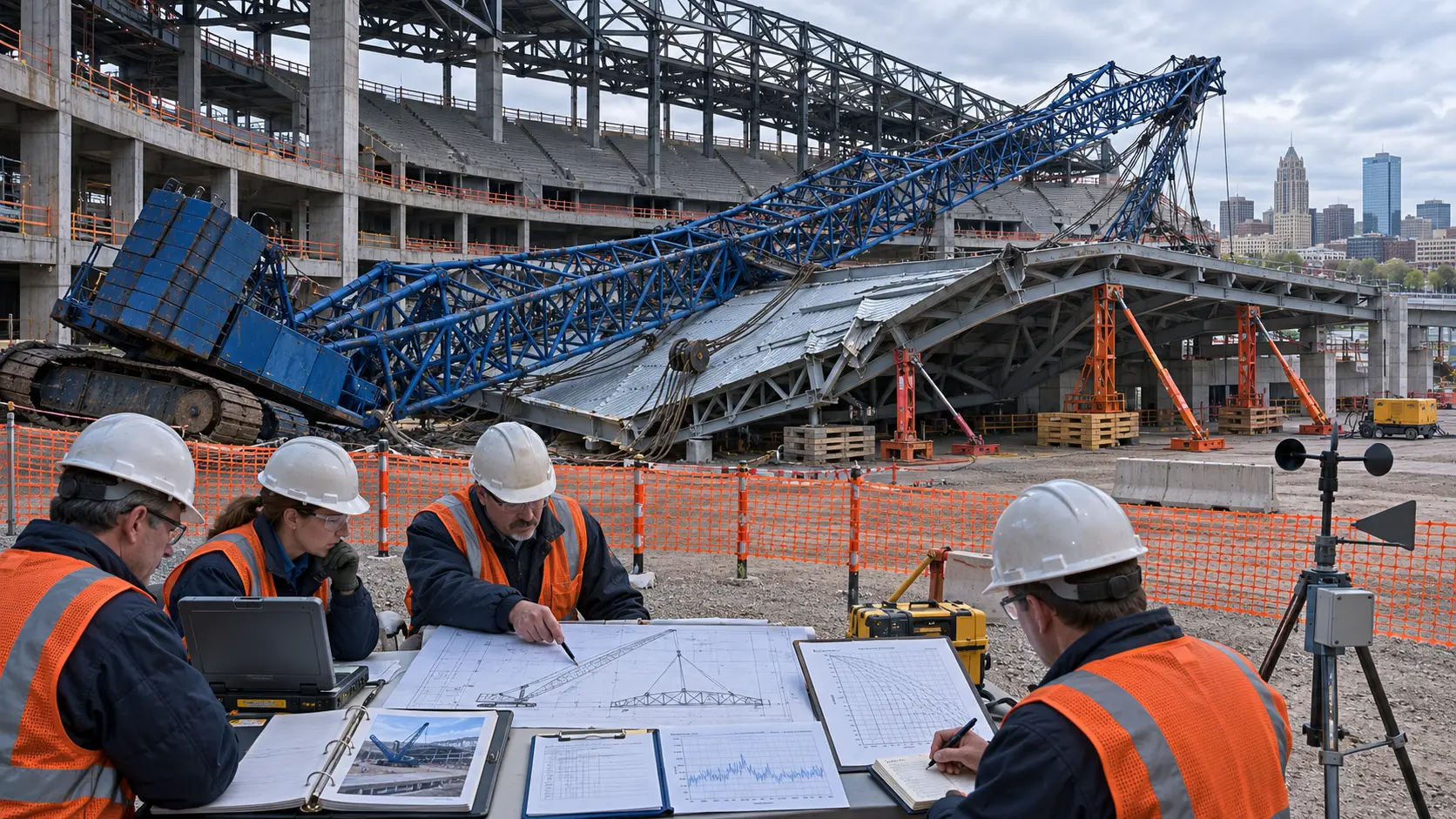
The crane was positioning an approximately 450-tonne stadium roof section when it began to tip. The suspended roof section struck a separate personnel platform, killing three ironworkers.
The lifting operation
The lift involved:
- A highly specialized heavy-lift crane
- A large prefabricated roof section
- Approximately 330 feet of lifting height
- Significant wind-exposed surface area
- Multiple contractors and separate lifting operations
- Workers positioned in a suspended personnel platform
Unlike a compact load, the roof section acted as a large sail. Its surface area made wind direction, gusts and load orientation particularly important.
What happened
The crane's capacity information was based on wind speeds not exceeding 20 mph. During the afternoon, recorded gusts reportedly reached approximately 28–30 mph. The lift continued until the crane and suspended load collapsed at approximately 5:15 p.m.
The Occupational Safety and Health Review Commission affirmed a serious violation concerning operation above the crane's stated wind limitation. The records also highlighted the importance of controlling access around suspended loads and separating personnel-lifting activities from hazardous heavy-lift operations.
The temporary-works lesson
A lift plan is not complete after calculating only the load weight and crane radius. It should also address:
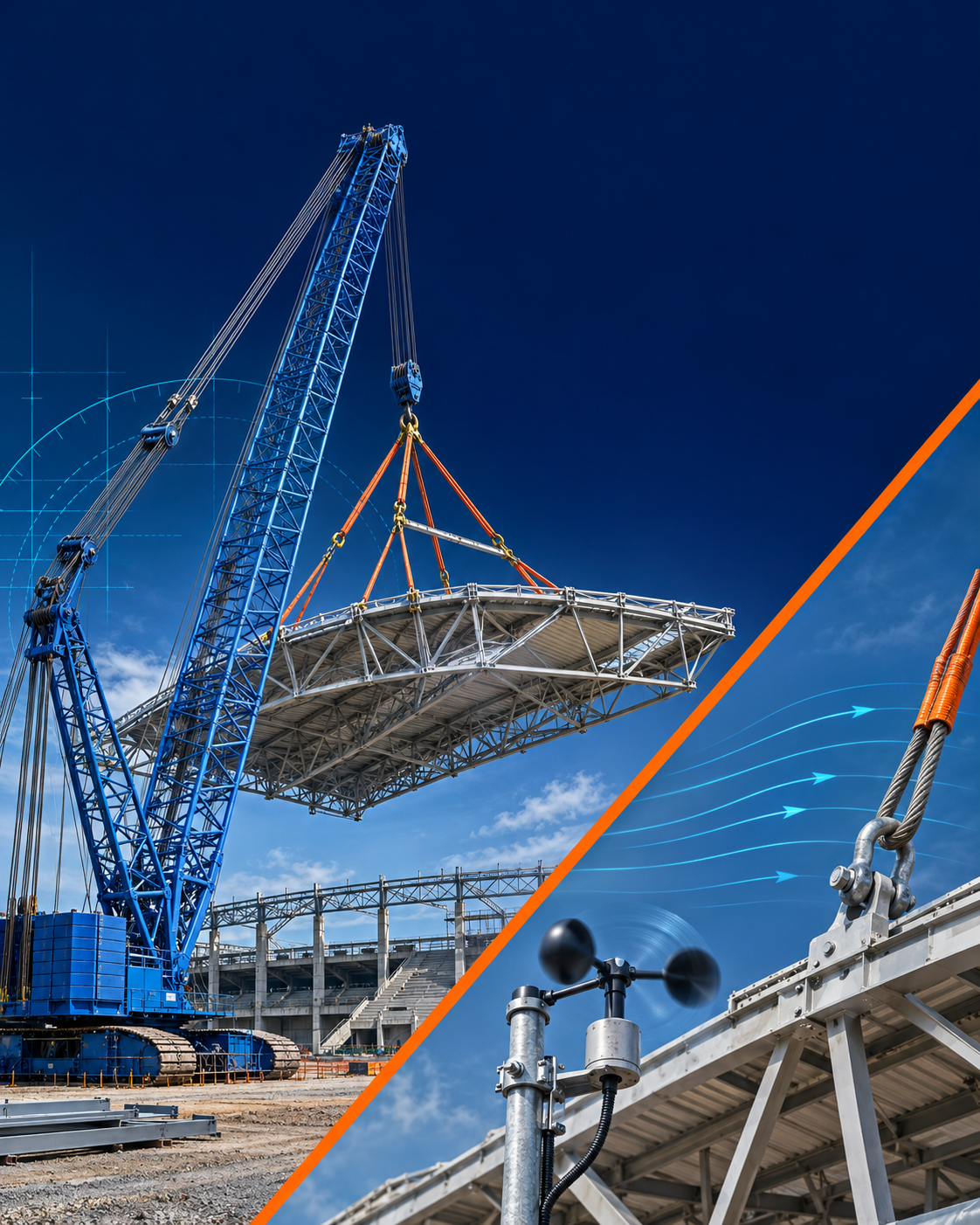
- Load dimensions and projected wind area
- Maximum sustained wind and gust limits
- Anemometer locations and continuous monitoring
- Clear stop-work authority
- Load-control and contingency arrangements
- Exclusion zones around suspended loads
- Interaction with personnel platforms and other cranes
- Communication between the lift supervisor, operator and project team
When site conditions leave the approved lifting envelope, the lift must stop.
This article is provided for general education and does not replace project-specific design, approved procedures or professional review. The accompanying images are AI-generated educational reconstructions, not historical photographs.