Design-to-Field Communication: Drawings People Can Build From
TWInst Editorial Team · 3 min
Engineering information only protects the project when it reaches the people installing, supervising and using the temporary works in a clear and usable form.
Calculations support the design, but field teams normally construct from drawings, specifications, sequences and briefings.
Information needed in the field
Temporary works information should clearly show:
- Plans, elevations, sections and critical details
- Dimensions, levels, spacing and tolerances
- Component types, capacities and orientation
- Foundations, bearing surfaces and anchors
- Bracing, ties, connections and load paths
- Loading limits and permitted uses
- Installation and dismantling sequences
- Access, edge protection and exclusion zones
- Hold points, inspection and monitoring requirements
- Residual risks and prohibited alterations
The current accepted revision should be available at the point of work. Superseded information should be removed from use.
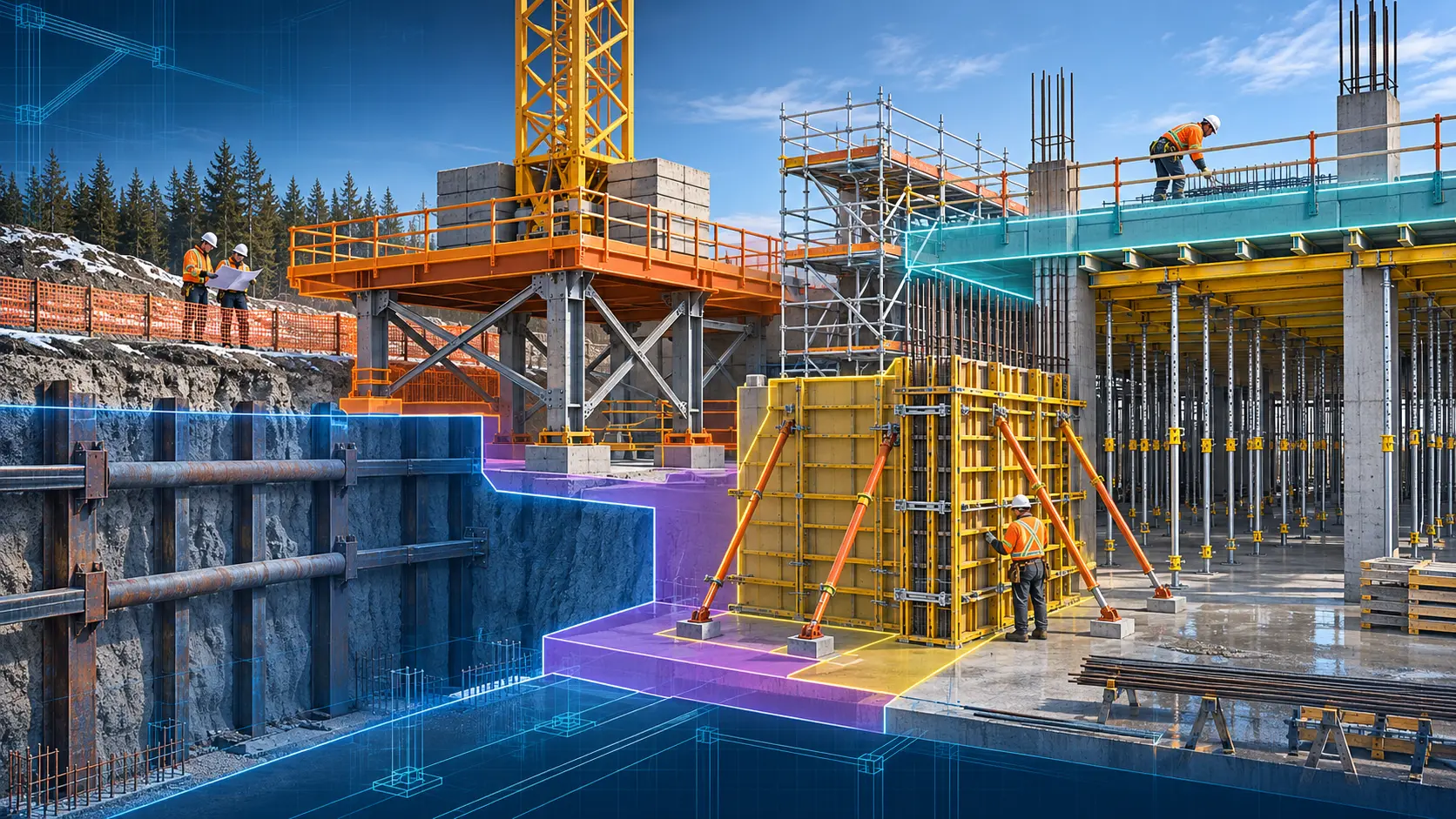
Confirming understanding
Complex activities should be supported by pre-installation briefings, marked-up visuals, models or step-by-step sequences. Questions should be raised through a defined technical query route rather than resolved through unrecorded assumptions.
Field feedback is also important. Constructability issues and unexpected conditions should return to the design team before the affected work proceeds.

The best design package is one that the field can understand, verify and construct correctly.
General educational information only. Project-specific work should follow applicable requirements, approved engineering documents, manufacturer instructions and the project's temporary works procedure.