Built to Disappear: The Story Behind Temporary Works
TWInst Editorial Team
Temporary works are almost as old as construction itself. Ancient builders used timber centering to support arches, ramps to move heavy materials and temporary platforms to reach work areas. These systems were removed after construction, but without them, the permanent structure could not have been built.
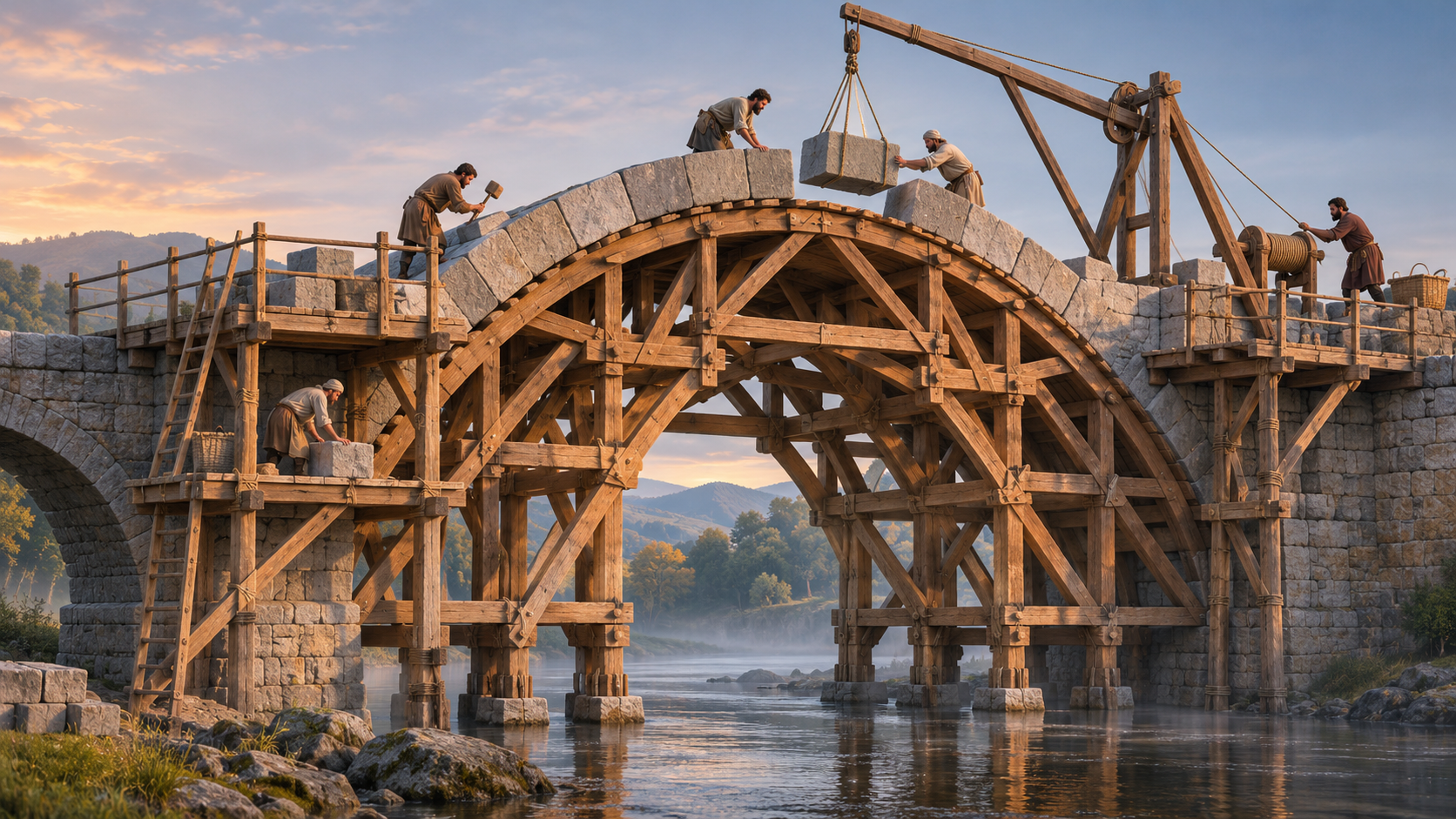
Why did temporary works become a formal discipline?
As bridges, buildings and infrastructure became larger, temporary supporting systems carried increasingly significant loads. During the 1960s and 1970s, several serious falsework collapses demonstrated that temporary structures could present the same, or greater, risks as permanent works.
These events led to deeper investigation, including the 1975 Bragg Report. Its recommendations helped shape the first edition of BS 5975 in 1982, introducing a more structured approach to falsework design and control.
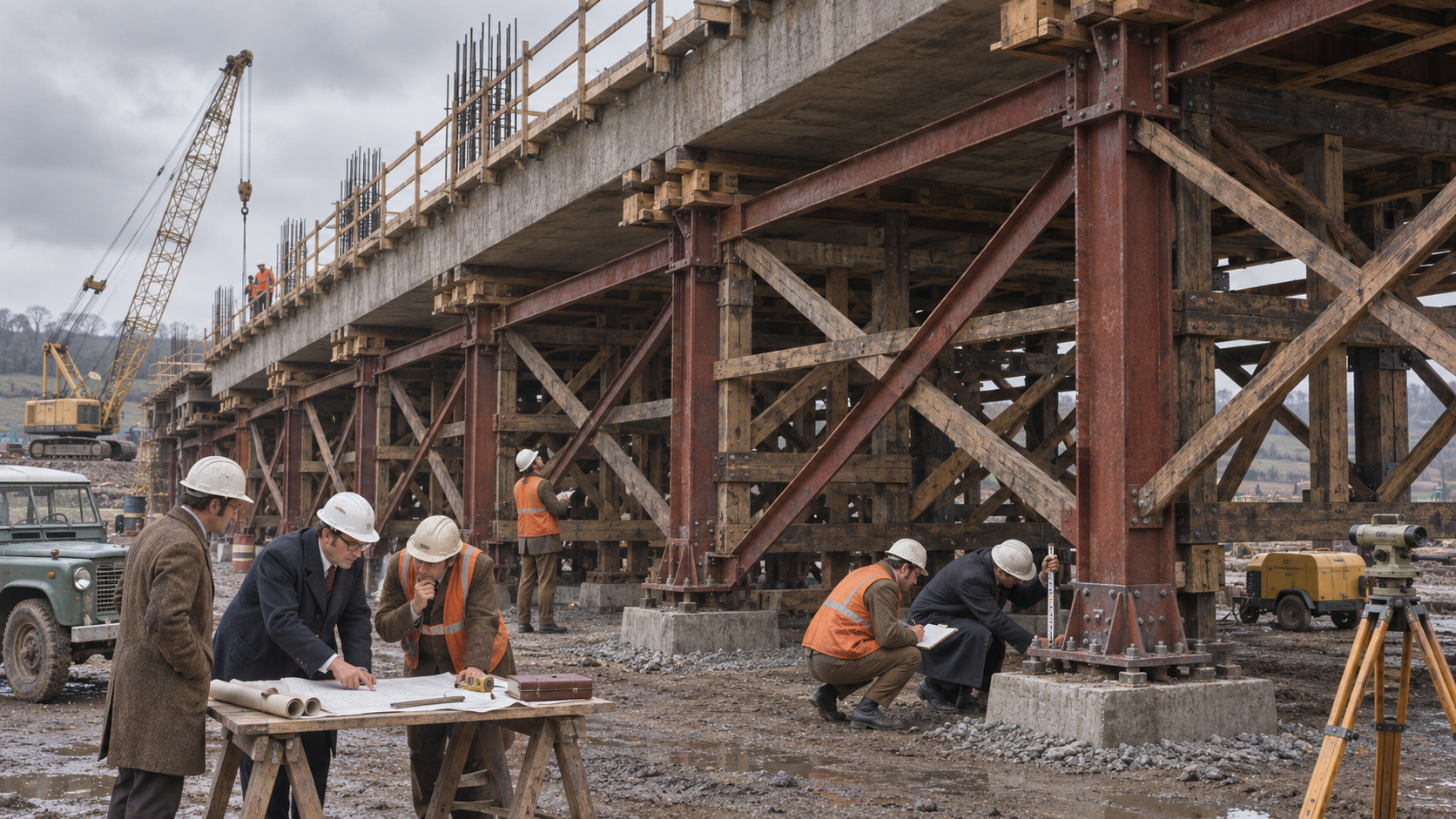
The important lesson
Temporary works did not emerge because construction suddenly required temporary structures; they had always existed. The modern discipline emerged because the industry recognized that these systems needed:
- Clear responsibility and coordination
- Appropriate design and independent checking
- Controlled installation and inspection
- Authorization before loading or use
- Monitoring during service
- Planned modification and dismantling
Today, temporary works include formwork, falsework, scaffolding, excavation support, access systems, lifting arrangements and the temporary conditions of permanent structures.
Their service life may be short, but the loads and consequences are real. Poor design, assembly or control can result in instability or collapse.
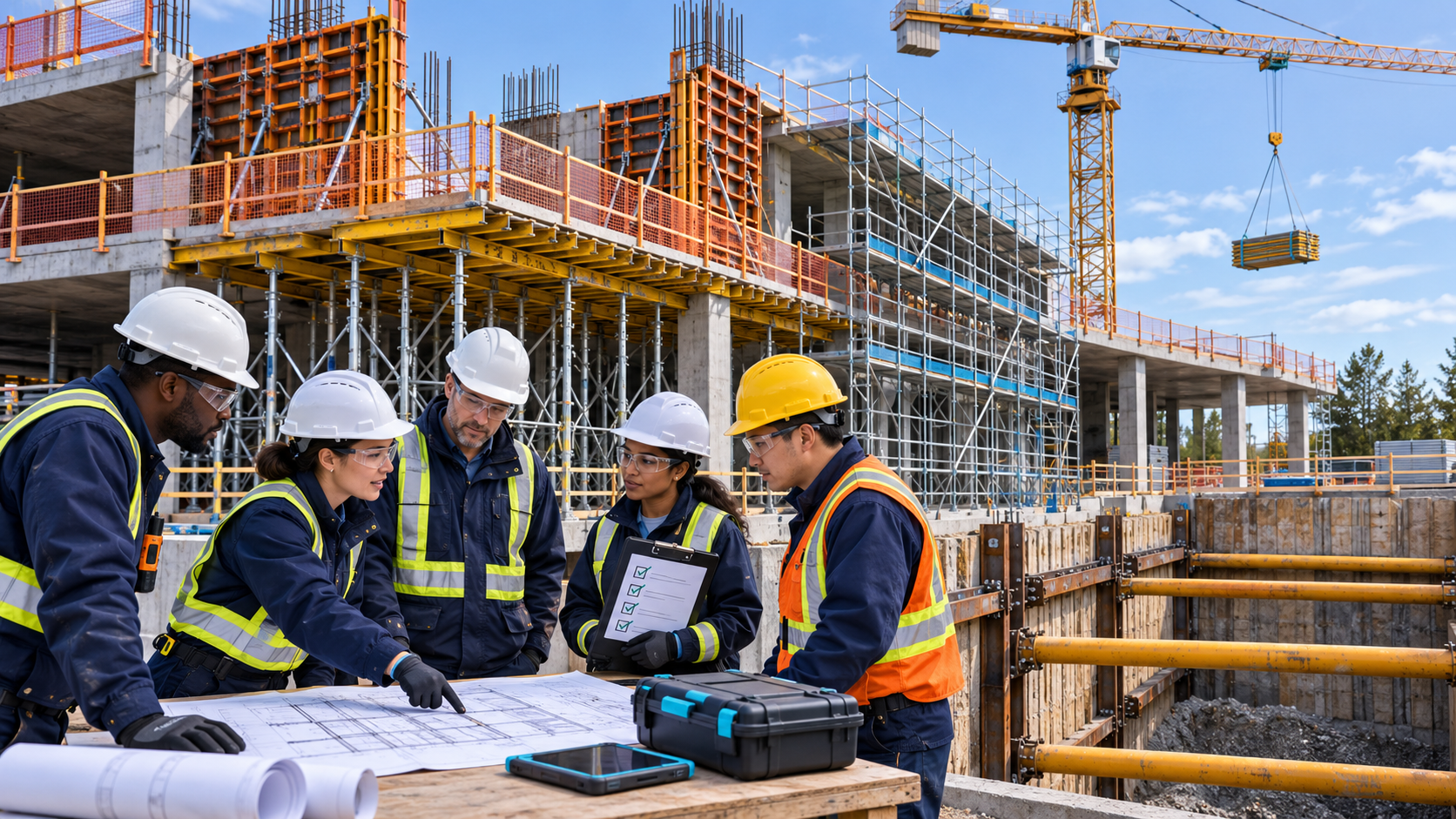
Temporary does not mean less important. It means the system must perform safely for a defined purpose, during a defined period, under controlled conditions.
General educational content only. Project requirements must be established by the responsible parties and qualified professionals under the applicable jurisdiction, regulations, standards and project procedures.